Supreme Court Declines to Hear AI-Generated Art Copyright Case
Key Points
- Stephen Thaler sought copyright for an AI‑generated artwork titled "A Recent Entrance to Paradise".
- The U.S. Copyright Office rejected the application in 2022, citing lack of human authorship.
- Lower courts upheld the rejection, and the Supreme Court declined to review the case.
- The decision keeps the existing rule that copyright requires a human creator.
- Thaler’s similar patent and trademark applications for AI inventions were also denied.
- Legal experts note the ruling may affect the creative industry during crucial growth years.
The U.S. Supreme Court refused to review a lawsuit brought by computer scientist Stephen Thaler seeking copyright protection for an artwork produced by his own artificial‑intelligence system. The denial leaves in place lower‑court rulings that rejected Thaler’s claim, reinforcing the Copyright Office’s stance that works must be created by a human author to qualify for protection. The decision also underscores similar rejections of Thaler’s AI‑generated patent and trademark applications, highlighting ongoing legal challenges for creators using machine‑learning tools.
Background of the dispute
In 2018, Stephen Thaler, a computer scientist, applied for copyright protection for an artwork titled "A Recent Entrance to Paradise," which was generated by an artificial‑intelligence system he developed. Unlike popular AI tools such as ChatGPT or Midjourney, Thaler’s system created the image autonomously.
Copyright Office rejection
The U.S. Copyright Office denied the application in 2022, stating that the work was not the product of a human author. Thaler appealed the decision, but both a federal judge in Washington and the U.S. Court of Appeals ruled against him, upholding the Copyright Office’s position.
Supreme Court refusal
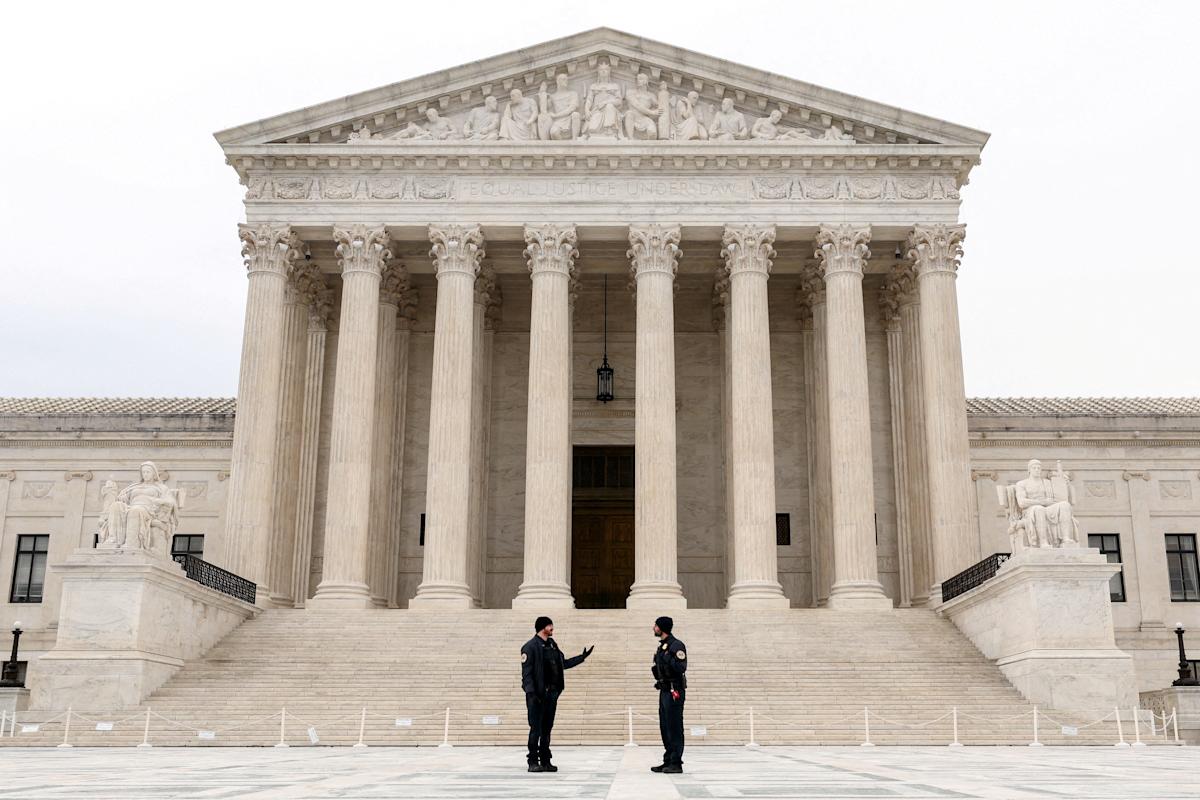
On a recent Monday, the Supreme Court declined to hear Thaler’s case. By refusing to grant certiorari, the Court allowed the lower‑court ruling to remain in effect, meaning the artwork will not receive copyright protection.
Implications for AI‑generated creations
The refusal signals that, at least for now, the nation’s highest court is not prepared to overturn the existing test that requires a human author for copyright eligibility. While the Court could consider a related case in the future, Thaler’s attorneys warned that any eventual reversal would come too late to mitigate the impact on the creative industry during "critically important years."
Parallel patent and trademark challenges
Thaler has also sought patents and trademarks for AI‑generated inventions, but those applications were rejected for the same reason: the lack of a human inventor or author.
Future outlook
The decision leaves AI developers and artists without a clear path to copyright protection for machine‑generated works, maintaining the status quo that such creations remain uncopyrightable under current U.S. law.