Amazon launches ‘Help Me Decide’ AI shopping assistant
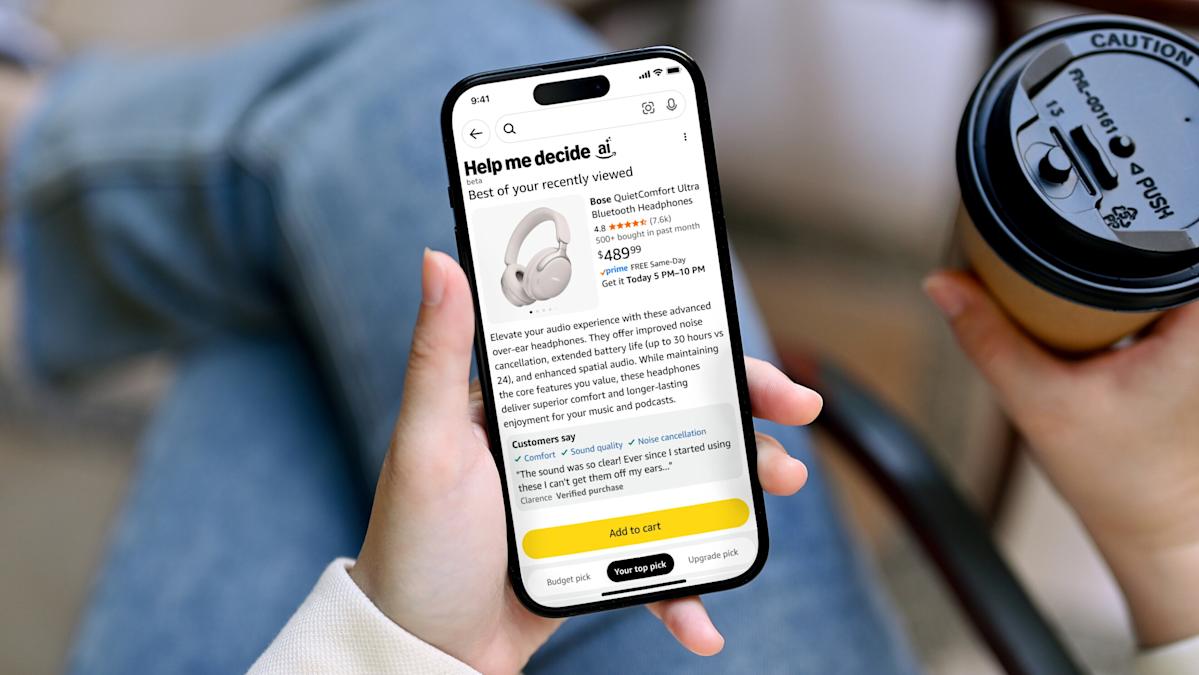
Key Points
- Amazon launches Help Me Decide, an AI‑powered recommendation tool for U.S. shoppers.
- The feature appears on product pages after users browse without purchasing.
- It suggests a primary product, an upgrade pick, and a budget alternative.
- Recommendations are based on browsing history, search terms, and past purchases.
- Help Me Decide uses Amazon Bedrock, SageMaker, and OpenSearch for its AI processing.
- Customer reviews are incorporated to support each recommendation.
- The tool is available in the Amazon app and mobile browsers for iOS and Android.
- It builds on earlier Amazon AI initiatives such as the Interests tool and AI‑generated hosts.
Amazon has introduced a new AI-powered feature called Help Me Decide, aimed at guiding indecisive shoppers toward a purchase. The tool appears on product pages in the U.S. when a user has been browsing without committing, and it draws on browsing history, search activity, and prior purchases to suggest a primary product, an upgrade option, and a budget-friendly alternative. Help Me Decide relies on Amazon's Bedrock and SageMaker machine‑learning platforms along with OpenSearch to compile recommendations and incorporate customer reviews. The feature is currently live in the Amazon app and mobile browsers.
Introducing Help Me Decide
Amazon has added a new AI-driven shopping assistant named Help Me Decide to its U.S. retail experience. Designed to nudge shoppers who linger on product pages without finalizing a purchase, the feature surfaces a button that invites users to receive personalized recommendations. When tapped, the assistant reviews a shopper’s recent browsing patterns, search queries, and previous purchases to generate a set of suggestions.
How the tool works
Help Me Decide analyzes three main data points: the items a customer has looked at, the language used in their searches, and the products they have bought in the past. Based on this information, the AI selects a primary recommendation that it deems the best fit, an upgraded alternative for those seeking higher‑end features, and a lower‑priced option for budget‑conscious shoppers. The recommendations are accompanied by explanations that reference product features and the shopper’s own history, and they pull in relevant customer reviews to support the choice.
Technology behind the recommendations
The feature is powered by Amazon’s own Bedrock and SageMaker machine‑learning platforms, which handle the heavy lifting of model inference and data processing. OpenSearch is also employed to index and retrieve the various signals that feed into the recommendation engine. Together, these tools allow the assistant to stitch together a coherent suggestion that feels tailored to each individual user.
Real‑world example
Amazon illustrates the tool’s capability with a camping scenario. A shopper who previously viewed adult and children’s sleeping bags, camping accessories, and kids’ hiking boots might receive a recommendation for an all‑season four‑person tent. The assistant explains why the tent aligns with the shopper’s interests and includes excerpts from existing reviews to reinforce confidence in the pick.
Availability and user experience
Help Me Decide is currently live for shoppers in the United States and can be accessed through the Amazon mobile app on iOS and Android, as well as via mobile browsers. When a user chooses to “keep shopping for” a product, the assistant’s button appears on the product detail page after sufficient browsing activity in the same category. The feature complements Amazon’s earlier AI tools, such as the Interests tool, which allows natural‑language prompts to surface shopping results, and experimental AI‑generated hosts that summarize products before purchase.
Potential impact
By offering a concise, AI‑curated set of options, Amazon hopes to reduce decision fatigue and encourage conversion among shoppers who might otherwise abandon a purchase. The reliance on customer reviews aims to build trust in the suggestions, while the inclusion of both premium and budget alternatives broadens appeal across different shopper segments.