OpenAI Introduces GPT‑5 Powered “Company Knowledge” for Business and Education Users
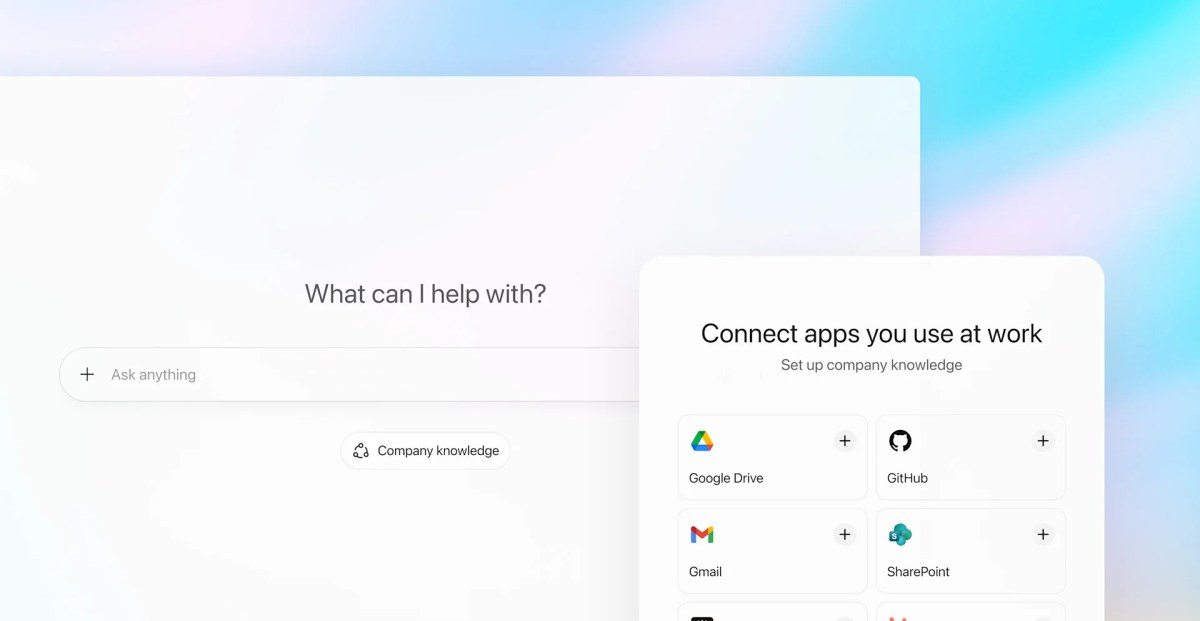
Key Points
- OpenAI launches “company knowledge,” a GPT‑5 powered feature for Business, Enterprise, and Education users.
- Integrates directly with Slack, SharePoint, Google Drive, and GitHub to retrieve workplace data.
- Provides answers with clear citations showing the source of each piece of information.
- Handles ambiguous queries, applies date filters, and adapts search strategy in real time.
- Feature must be manually enabled for each conversation and does not browse the public web.
- Future updates will broaden tool support and add new capabilities.
OpenAI has launched a new ChatGPT feature called “company knowledge,” available to Business, Enterprise, and Education customers. Powered by GPT‑5, the update lets the chatbot search across workplace tools such as Slack, SharePoint, Google Drive, and GitHub to answer user queries with clear citations. The feature is designed as a conversational search engine that can handle ambiguous questions, apply date filters, and provide multi‑source answers while users manually enable it for each conversation. OpenAI says future updates will broaden the range of supported tools.
Feature Overview
OpenAI announced a new capability for ChatGPT that it calls “company knowledge.” The feature is aimed at Business, Enterprise, and Education subscribers and is built on a version of GPT‑5. Unlike earlier app connections, this update directly integrates with common workplace repositories including Slack, SharePoint, Google Drive, and GitHub. By linking to these sources, ChatGPT can retrieve information from multiple locations in a single conversational exchange.
How It Works
When users start a new conversation and manually select the company knowledge mode, the model runs simultaneous searches across the connected tools. The system then compiles the findings, ranks relevant details, and presents an answer that includes explicit citations indicating where each piece of information originated. This citation approach is intended to give users confidence in the results and to make it easy to trace back to the underlying documents.
The feature is marketed as a conversational search engine for the workplace. It can answer questions that span emails, chat logs, documents, and issue‑tracking tickets, allowing users to quickly gather briefings, status updates, or historical decisions without leaving the chat interface.
Capabilities and Flexibility
OpenAI highlights several functional strengths. The model can handle ambiguous queries by generating multiple searches and reconciling differing viewpoints. It also supports date‑based filtering, enabling users to ask for information relevant to a particular time period. The system is described as “thinking while it searches,” meaning it can adapt its search strategy based on early results to improve relevance.
Responses are limited to the data within the connected enterprise tools; the feature does not browse the public web, nor does it generate charts or images while active. If users do not enable company knowledge, ChatGPT can still answer questions using the connected apps, but those answers will lack the depth and citation detail provided by the dedicated mode.
Limitations and Future Plans
Company knowledge must be manually turned on for each new chat session, and the current set of supported integrations is limited to the aforementioned platforms. OpenAI notes that the feature does not perform web searches or produce visual content during its operation. The company has indicated that upcoming updates will expand support to additional tools and capabilities, further enhancing the conversational search experience for enterprise and educational users.