Google Gemini’s Task Automation Shows Promise Despite Early Hiccups
Key Points
- Gemini can control phone apps to place food orders and schedule rides.
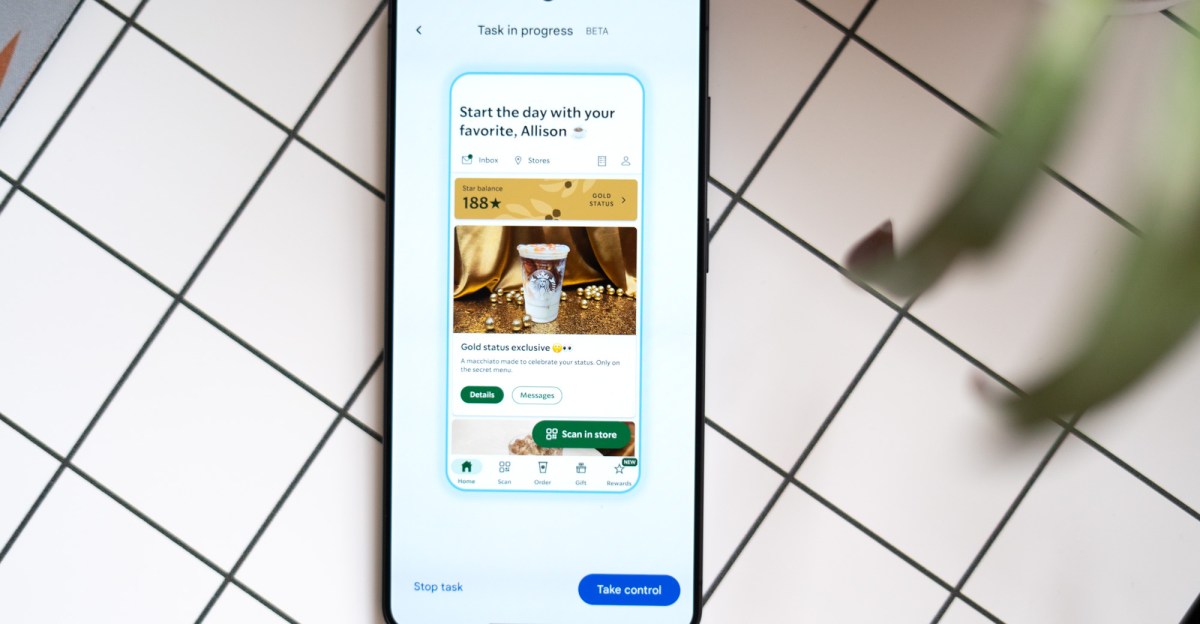
- The beta feature runs in the background and shows on‑screen status updates.
- User confirmation is required before the final order or ride is placed.
- Performance is slower than a human, with occasional pauses for permissions.
- Accuracy is generally high, with only minor adjustments needed.
- Tests included ordering a chicken teriyaki combo and scheduling an airport ride.
- Current app designs are not optimized for AI interaction.
- Google suggests developers adopt Model Context Protocol or Android app functions.
- Industry sees this as a preview of more capable AI mobile assistants.
Google’s Gemini AI can now control phone apps to place food orders and schedule rides, but the beta feature feels slow and sometimes clunky. It runs in the background, requires user confirmation before finalizing actions, and occasionally stalls on permissions or location prompts. While accuracy is often high, the experience highlights the need for app designs that better accommodate AI agents. Industry insiders see this as a preview of future mobile assistants, with developers urged to adopt newer integration methods like Model Context Protocol.
Overview of Gemini Task Automation
Google has introduced a beta version of task automation for its Gemini AI on Android devices. The feature lets Gemini interact directly with apps such as food‑delivery and rideshare services, performing actions on the user’s behalf while the phone is used for other tasks.
How the Feature Works
When a user initiates an automation, Gemini operates in the background. A small text bar appears at the bottom of the screen describing the current step, for example when selecting menu items in a food‑ordering app. The AI proceeds through the app’s interface—tapping, scrolling, and entering information—until it reaches the final confirmation screen, where the user must manually approve the order or ride.
Performance and User Experience
Early testing shows that Gemini is noticeably slower than a human performing the same actions. Users reported that a simple Uber order can take several minutes, and the AI sometimes makes incorrect selections that it later corrects on its own. The system can also pause when an app requires additional permissions, such as location access, or when a delivery address needs adjustment. After the issue is resolved, the automation can be restarted without trouble.
Accuracy and Reliability
Despite the slower pace, the AI’s final outputs are often accurate. In most cases, only minor tweaks are needed before confirming an order. When failures occur, they tend to happen early in the process, usually within the first couple of minutes, and are linked to app‑specific prompts that the AI cannot handle automatically.
Practical Use Cases Demonstrated
Testers tried several scenarios. One involved ordering a chicken teriyaki combo, where Gemini correctly added two half‑portion servings after interpreting the menu layout. Another scenario scheduled a ride to an airport based on a calendar entry. By accessing email and calendar data, Gemini identified flight details, suggested appropriate departure times, and set up an Uber reservation after user confirmation.
Implications for Future Mobile Assistants
The experience underscores that current mobile apps, designed primarily for human interaction, are not optimized for AI control. Gemini’s reasoning‑based approach highlights the need for developers to adopt more robust integration methods, such as Model Context Protocol (MCP) or Android’s app functions, which would provide cleaner data interfaces for AI agents.
Industry Perspective
Sameer Samat, Google’s head of Android, noted that Gemini’s current method is a stopgap that leverages reasoning while other integration techniques mature. Observers see the beta as a glimpse of what AI‑driven mobile assistants could become once apps are built with AI compatibility in mind.
Conclusion
While Gemini’s task automation is still slow, occasionally error‑prone, and limited to a handful of services, it demonstrates a functional AI assistant capable of navigating real‑world apps. The feature’s limitations point to a broader industry challenge: redesigning app interfaces to better serve AI agents. If developers adopt newer protocols, future versions of Gemini could provide a smoother, faster, and more reliable mobile assistant experience.