Trump's AI Data Center Push Stalls Amid Chinese Parts Shortage and Tariffs
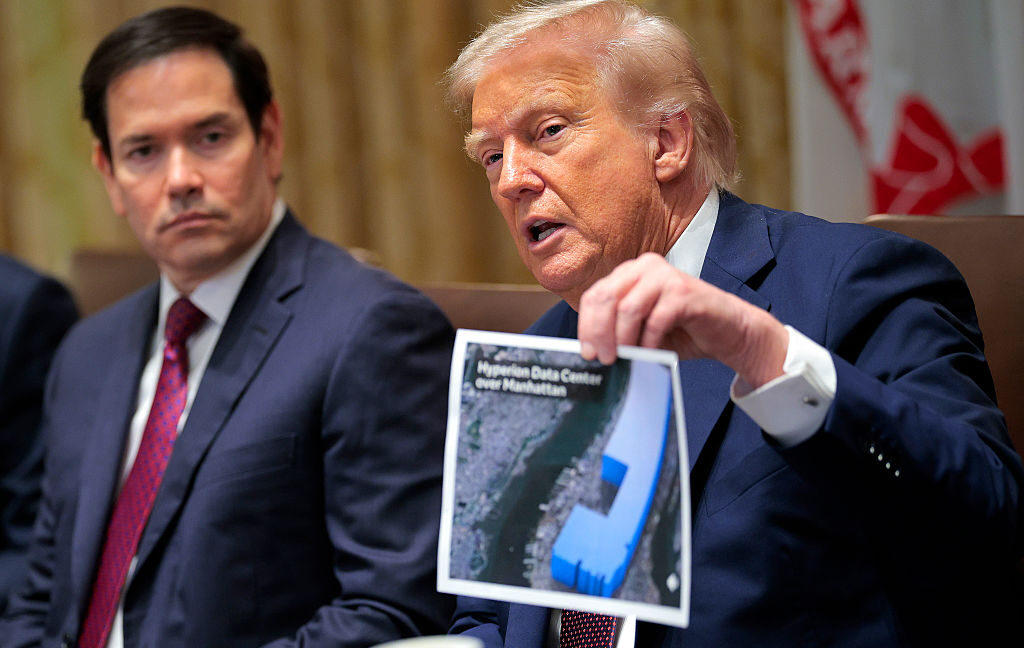
Key Points
- Trump's executive orders prioritize rapid AI data center construction.
- Tariffs on Chinese imports have limited access to essential power‑equipment components.
- Delivery times for transformers, switchgear and batteries have risen from months to up to five years.
- U.S. manufacturers cannot currently meet the surge in demand for these parts.
- Bloomberg reports nearly half of planned data centers face delay or cancellation.
- Only about one‑third of the largest AI data centers slated for 2026 are under construction.
- Developers are willing to pay tariffs and accept security risks to obtain Chinese parts faster.
President Donald Trump’s effort to fast‑track AI data center construction is hitting a wall. Developers say aggressive tariffs on Chinese imports have crippled the supply chain for essential power‑equipment components, pushing delivery times from months to years. With U.S. manufacturers unable to meet demand, nearly half of the year’s planned facilities face delay or cancellation, jeopardizing the administration’s goal of keeping America ahead in the artificial‑intelligence race.
President Donald Trump announced last year that building AI data centers would be a top priority for the United States, aiming to secure a lead over China in the rapidly evolving artificial‑intelligence race. The directive, issued through a series of executive orders, called on tech firms to "build, bring, or buy" the power needed for these facilities.
In practice, the plan has run into a stark supply‑chain bottleneck. Developers report that tariffs imposed on Chinese imports are choking the flow of critical components such as transformers, switchgear and batteries—items that have historically been sourced from China for decades. Before the pandemic, delivery windows for these parts ranged from 24 to 30 months; Bloomberg now estimates that wait times can stretch to five years.
That delay matters because the United States aims to stay five years ahead of China in AI capability. Companies eager to meet the president’s timeline are willing to absorb tariffs and even tolerate alleged national‑security risks to secure faster shipments from China, but the cost and uncertainty remain high.
Domestic manufacturers are not yet positioned to fill the gap. Trump has expressed a preference for U.S.‑made equipment, yet Bloomberg notes that "U.S. manufacturing capacity for these devices cannot keep up with demand." The market‑intelligence firm Sightline Climate adds that only a third of the largest AI data centers slated for 2026 are actually under construction.
Without the necessary power infrastructure, the ambitious rollout stalls. As one analyst put it, builders can’t simply "plug in" a data center if there’s no electricity to feed it. The shortage of power‑equipment thus threatens to derail the administration’s broader strategy to cement America’s dominance in AI.
While Trump did not address the power‑equipment shortfall in his March order to tech companies, the issue has become a central obstacle for developers. The combination of tariff policy, limited domestic production, and prolonged lead times for critical components creates a perfect storm that could see almost half of the year’s planned data centers delayed or canceled, according to Bloomberg.
Industry observers warn that unless the supply chain issue is resolved—either through policy adjustments, increased domestic capacity, or alternative sourcing—the United States risks falling behind its geopolitical rival in a sector many consider pivotal to future economic and security leadership.