Trump says Pentagon deal with Anthropic possible after company’s blacklisting
Key Points
- President Trump said a Pentagon deal with Anthropic is "possible" after previously banning the firm’s technology.
- Anthropic CEO Dario Amodei met with White House Chief of Staff Susie Wiles and Treasury Secretary Scott Bessent on April 18 to discuss the Mythos AI model.
- The Department of Defense labeled Anthropic a "supply chain risk to national security" in February 2026, barring the company from new contracts.
- A federal appeals court denied Anthropic’s request to block the designation, while a San Francisco judge issued an injunction against the blanket ban.
- Anthropic’s revenue exceeds $30 billion and the company is considering an IPO despite the ongoing legal dispute.
- Mythos is being tested by intelligence agencies and CISA, and the White House is drafting protocols for limited federal access.
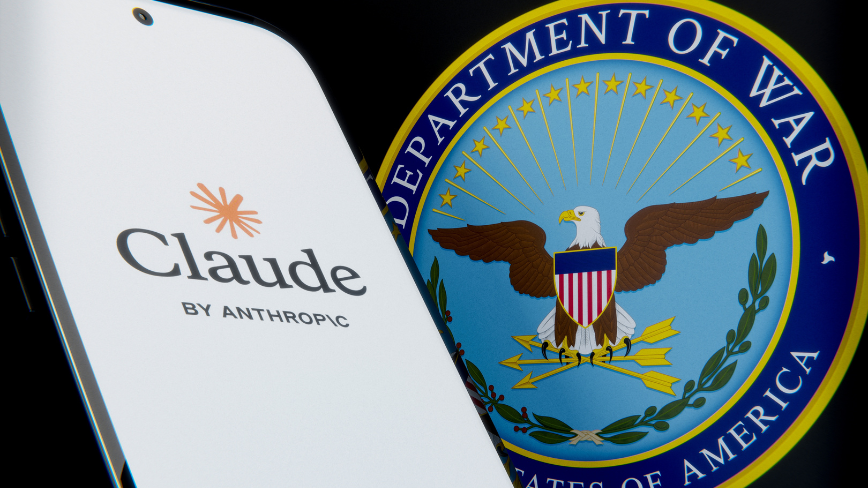
President Donald Trump told CNBC that a deal allowing Anthropic’s AI models to be used by the Department of Defense is "possible," reversing a February order that barred federal agencies from the firm’s technology. The comment followed a White House meeting on April 18 in which Anthropic CEO Dario Amodei discussed the company’s new Mythos model with Chief of Staff Susie Wiles and Treasury Secretary Scott Bessent. Anthropic remains under a supply‑chain‑risk designation that bars it from Pentagon contracts while two federal courts issue conflicting rulings on the ban.
President Donald Trump told CNBC’s Squawk Box on Tuesday that a deal permitting the Pentagon to use Anthropic’s AI models is "possible," a stark departure from his February directive that ordered all federal agencies to cease using the company’s technology. Trump described Anthropic as "shaping up" and praised the firm’s intelligence, saying it could be of "great use" to the United States.
The remarks came on the heels of a White House meeting held on Friday, April 18, where Anthropic chief executive Dario Amodei sat down with Chief of Staff Susie Wiles and Treasury Secretary Scott Bessent. The trio discussed Mythos, Anthropic’s latest frontier‑AI system that the company touts as highly capable in cybersecurity tasks. The administration called the conversation “productive and constructive,” and Anthropic said the discussion focused on shared priorities such as AI safety, America’s lead in the AI race, and cybersecurity.
Anthropic’s relationship with the Department of Defense has been turbulent. In July 2025 the firm signed a $200 million contract that made it the first AI lab cleared for use on the DOD’s classified networks. Negotiations to deploy its Claude model on the GenAI.mil platform stalled in September when the Pentagon demanded unrestricted access to the models for all lawful purposes. Anthropic drew firm lines, refusing to let its technology power fully autonomous weapons or domestic mass‑surveillance programs.
Defense Secretary Pete Hegseth responded by designating Anthropic a “supply chain risk to national security” in late February 2026, a label previously reserved for firms linked to foreign adversaries. The designation, confirmed to Anthropic’s leadership on March 5, required defense contractors to certify they were not using the company’s models in military work. Trump amplified the move with a Truth Social post ordering agencies to stop using Anthropic’s technology.
Legal challenges have split the outcome. A federal appeals court in Washington, D.C., denied Anthropic’s request on April 8 to temporarily block the supply‑chain‑risk label. Meanwhile, U.S. District Judge Rita Lin in San Francisco issued a preliminary injunction in late March that bars enforcement of the Truth Social ban across the rest of the government. As a result, Anthropic is excluded from new Pentagon contracts but can continue work with other federal agencies while the cases proceed.
Despite the ban, the DOD has kept using Claude during the ongoing U.S.–Iran conflict, which began before the designation took effect. The Mythos model, however, has attracted interest from parts of the intelligence community and the Cybersecurity and Infrastructure Security Agency (CISA). The White House Office of Management and Budget is reportedly drafting protocols to grant controlled access to Mythos for select agencies.
The presence of Treasury Secretary Bessent at the April 18 meeting signaled that economic and financial‑security arguments for Mythos access have reached the highest levels of the administration. An Axios source warned that denying the government access to the technology would be "grossly irresponsible" and could give China a strategic edge.
Anthropic has hired Ballard Partners, a lobbying firm once headed by Wiles, to advocate for inclusion in future Department of War procurement. The firm’s annualized revenue now tops $30 billion, and executives are weighing an initial public offering, though the supply‑chain‑risk label threatens to tarnish its credibility with enterprise customers.
Trump’s optimistic comment reflects ongoing talks that have yet to produce a concrete agreement. Defense Secretary Hegseth has not withdrawn his position, and the appeals‑court ruling on the supply‑chain‑risk designation remains in force. Whether Anthropic will regain full access to Pentagon contracts hinges on the outcome of the pending litigation and the administration’s willingness to reconcile security concerns with the capabilities of its new AI models.