TDK Ventures’ Nicolas Sauvage bets on AI hardware and robotics as the next growth frontier
Key Points
- Nicolas Sauvage founded TDK Ventures in 2019, managing $500 million across four funds.
- Early investment in Groq, an inference‑chip startup, led to a $6.9 billion valuation.
- Portfolio includes solid‑state grid transformers, sodium‑ion batteries, and alternative chemistries.
- Robotics bets focus on narrow, high‑impact tasks: Agility Robotics (warehouse movers) and ANYbotics (hazardous‑environment robots).
- Sauvage predicts a CPU renaissance to orchestrate complex AI agent workflows.
- Chinese “vibe manufacturing” is rapidly shortening hardware design cycles, according to an Eclipse report.
- Dexterity remains the biggest unresolved challenge for physical AI systems.
Corporate venture arm TDK Ventures chief Nicolas Sauvage is doubling down on the less glamorous side of artificial intelligence. The French executive, who launched the fund in 2019, has already steered $500 million into inference chips, specialized robots and emerging battery chemistries. His most visible win, Groq’s $6.9 billion‑valued inference processor, exemplifies a strategy that looks four years ahead to bottlenecks and backs founders already solving them. Sauvage now watches CPUs, Chinese “vibe manufacturing” and the quest for dexterous machines as the next sources of competitive advantage.
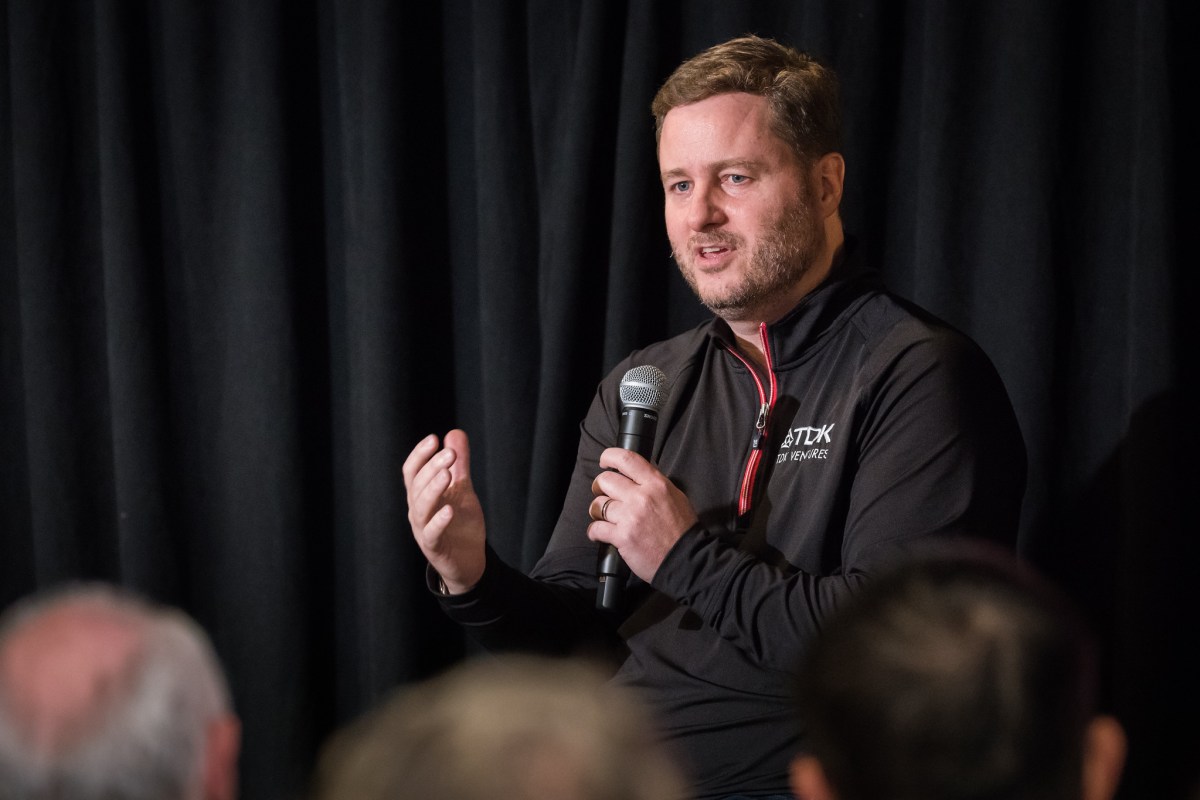
When Nicolas Sauvage walked onto the stage at StrictlyVC’s San Francisco event last week, he wasn’t selling the next consumer gadget. He was laying out a four‑year horizon for the parts of artificial intelligence that most investors overlook – the infrastructure that makes models run, not just train.
Since founding TDK Ventures, the corporate venture arm of the Japanese electronics conglomerate, in 2019, Sauvage has overseen $500 million across four funds. His early bet on Groq, the inference‑chip startup co‑founded by former Google TPU engineer Jonathan Ross, paid off handsomely. Groq’s most recent financing round pushed its valuation to $6.9 billion, a testament to the growing demand for fast, cheap model inference as AI agents proliferate across dozens of calls per query.
Groq’s approach – stripping the architecture down until nothing could be removed without breaking functionality – appealed to Sauvage because it aligned with TDK’s own constraints. Unlike consumer hardware, which hits a natural ceiling, inference workloads keep compounding as new applications and larger models emerge. The result is a market that exploded this year, driven by AI agents that plan, act and iterate across multiple steps.
Beyond chips, TDK Ventures’ portfolio reflects the same “bottleneck‑four‑years‑out” mantra. The fund backs solid‑state grid transformers, sodium‑ion batteries for data centers, and alternative chemistries that sidestep the geopolitical fragility of lithium and cobalt. In robotics, the focus is narrow but deep: Agility Robotics builds warehouse movers to address labor shortages, while Swiss‑based ANYbotics creates rugged machines for environments too hazardous for people.
“The robots we back don’t try to do everything,” Sauvage said. “They do one hard thing reliably.” That clarity of purpose, he argues, is what separates viable hardware bets from hype.
Now the conversation is shifting again, this time to central processing units. GPUs dominate the training phase, but the orchestration of AI agents – the branching, decision‑making logic that strings together dozens of inference calls – may belong to CPUs. Sauvage sees a “renaissance” for these flexible chips, which could become the glue that coordinates complex agent workflows.
Across the Pacific, a report from venture firm Eclipse flagged a new phenomenon he calls “vibe manufacturing.” Chinese manufacturers are compressing the design‑build‑test cycle for physical products with AI‑assisted iteration, outpacing Western supply chains. For Sauvage, the speed at which a company can iterate on atoms mirrors the rapid code iteration that has driven software breakthroughs.
The lingering challenge, according to Sauvage, is dexterity. While models improve fast enough to make physical AI inevitable, the hardware still lacks the fine‑motor fluency to match human hands. Companies that crack that problem could secure a manufacturing advantage that rivals any software edge.
In short, Sauvage’s playbook blends long‑term vision with a willingness to champion the parts of AI that don’t make headlines but will power the next wave of applications. Whether it’s inference chips, specialized robots or the CPUs that choreograph them, his bets aim to keep TDK Ventures at the forefront of an infrastructure‑driven AI future.