OpenAI rolls out major Codex update, previewing super‑app features for developers
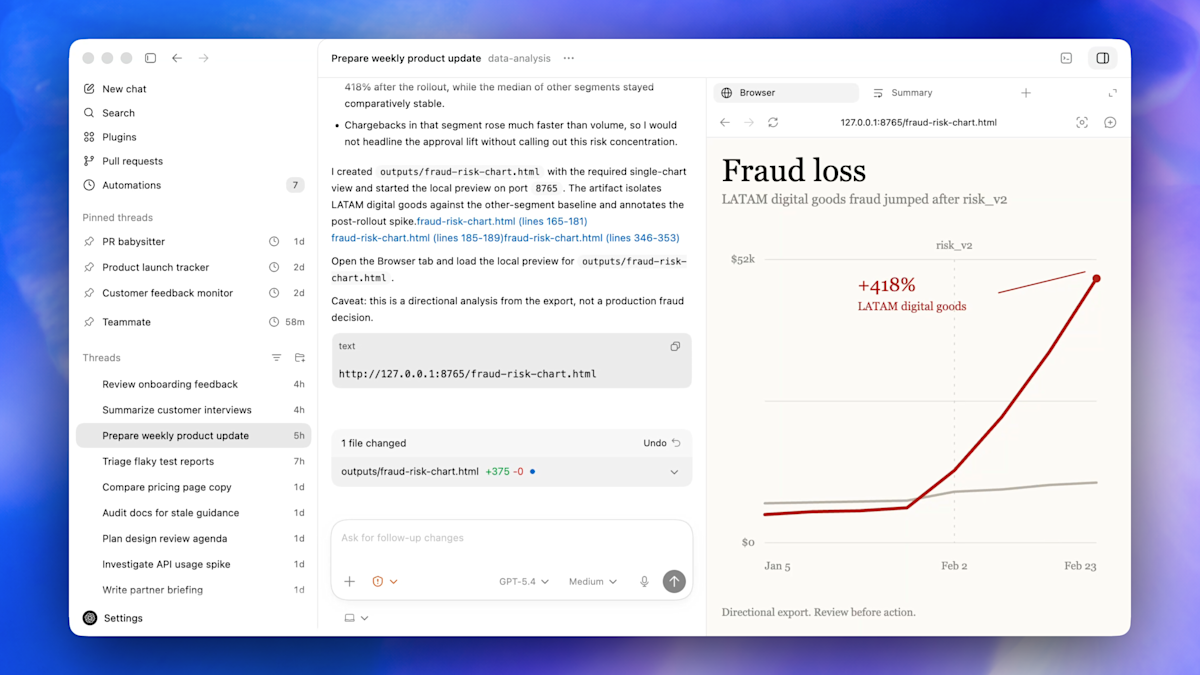
Key Points
- OpenAI releases a major Codex update that adds desktop app control, a built‑in browser, and image generation.
- 111 new plugins expand Codex's ability to gather context and integrate with developer tools.
- Memory features let Codex recall past tasks and offer proactive suggestions.
- Rollout begins with macOS users logged into ChatGPT; EU and UK access follows.
- The update serves as a preview of OpenAI's planned super‑app that will combine ChatGPT, Codex and a web browser.
OpenAI unveiled a substantial update to its Codex AI coding platform, adding multi‑app agents, a built‑in browser, image generation, and early memory functions. The enhancements let developers command specific desktop programs, integrate 111 new plugins, and receive proactive suggestions. The rollout begins with macOS users logged into ChatGPT, with EU and UK releases slated for later. While the full super‑app that merges ChatGPT, Codex and a web browser remains in development, the latest release offers a tangible glimpse of OpenAI’s broader vision for a unified desktop AI experience.
OpenAI announced a major upgrade to its Codex coding assistant, signaling the next step toward the company’s long‑term super‑app ambition. The update, revealed at a press briefing by Codex head Thibault Sottiaux, expands the platform’s capabilities beyond pure code generation to include direct interaction with desktop applications, a built‑in web browser, and integrated image creation tools.
Developers can now instruct Codex to launch or manipulate specific programs on their PC, a feature the company says differentiates it from rivals like Claude Cowork. OpenAI claims its "secret sauce" lets an AI agent run an app without hogging system resources, enabling both the user and the assistant to work side by side. The update also ships with 111 new plugins that combine skill sets, app integrations, and model‑context protocol servers, giving Codex richer ways to gather context and leverage the tools developers rely on daily.
Among the most visible additions is a built‑in browser equipped with a commenting system. Users can ask Codex to tweak elements of a webpage or web app, such as adjusting graph margins to prevent axis clipping. Coupled with the new image‑generation model gpt‑image‑1.5, Codex can produce product concepts, mockups, frontend designs, and even simple game assets. Screenshots can be fed back to the model, allowing it to verify that its output aligns with the user’s request.
OpenAI also previewed two memory features. The first lets Codex recall context from earlier tasks, promising faster and higher‑quality responses over time. The second enables proactive suggestions, like prompting a user to reply to a coworker’s comment on a Google Doc at the start of the day. The company says these memory functions will grow more sophisticated as the platform evolves.
The rollout targets desktop app users who are signed into their ChatGPT accounts. macOS users receive access first, with plans to extend availability to the EU and UK shortly. European users will also have to wait for the memory features, which are currently limited to the United States. While the full super‑app that unifies ChatGPT, Codex and a web browser remains in development, the latest Codex release provides developers a hands‑on preview of the integrated, multi‑modal AI experience OpenAI envisions.