OpenAI Launches ChatGPT Translate to Rival Google Translate
Key Points
- OpenAI launches ChatGPT Translate as a web‑based rival to Google Translate.
- Interface features two text boxes and language selection dropdowns.
- Supports translation from text; mobile browsers also allow voice input.
- Image translation is advertised but not yet functional.
- Includes style presets for customized translation tone.
- Google Translate still offers broader features like image, document, and website translation.
- No dedicated mobile app has been released for ChatGPT Translate.
- OpenAI has not disclosed the AI model powering the service.
OpenAI has introduced ChatGPT Translate, a web‑based translation service that aims to compete directly with Google Translate. The tool offers a simple two‑box interface for source and target text, supports translation from text, images, and voice (though image translation is not yet functional), and includes style presets such as “business formal.” While Google Translate allows uploads of documents, images, and entire webpages, ChatGPT Translate currently handles only text on desktop and text or microphone input on mobile browsers. No dedicated app has been announced, and OpenAI has not disclosed which AI model powers the service.
OpenAI Unveils Dedicated Translation Service
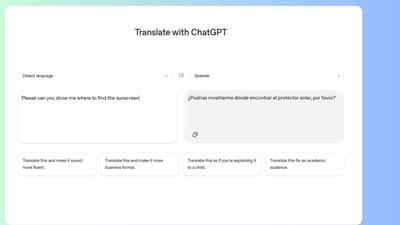
OpenAI has rolled out ChatGPT Translate, a standalone web tool designed to provide users with a direct alternative to Google Translate. The service mirrors the familiar layout of its competitor, featuring two text boxes—one for the source language input and another that displays the translated output—alongside dropdown menus for selecting source and target languages.
Key Functionalities and Current Limitations
According to the homepage, ChatGPT Translate can translate from text, images, and voice. In practice, the desktop version currently supports only text input, while mobile browsers allow users to submit text or use their device’s microphone for spoken input. Image translation is mentioned in the marketing copy but is not yet operational in any version of the service.
The platform also introduces style presets that let users specify the tone of the translation, such as “translate this and make it more business formal.” This feature adds a layer of customization not found in the standard Google Translate interface.
Comparison With Google Translate
Google Translate remains the more feature‑rich option, offering the ability to upload images, documents, and even whole websites for translation. ChatGPT Translate’s current capabilities are more limited, focusing primarily on text and, on mobile, voice input.
Unlike Google’s offering, OpenAI has not released a dedicated mobile app for ChatGPT Translate. The service is accessible only through its web interface, and there is no indication of plans to expand to app stores.
Background and Context
Translation features have been part of the regular ChatGPT chatbot for years, allowing users to request translations within the conversational interface. By launching a dedicated translation site, OpenAI is separating this functionality into a focused product.
OpenAI has not provided details about the underlying AI model that powers ChatGPT Translate, nor has it issued formal announcements beyond the website’s launch page.
Implications for the Translation Market
The introduction of ChatGPT Translate signals OpenAI’s intention to compete in the crowded online translation space. By leveraging the capabilities of its language models, OpenAI may offer more nuanced or context‑aware translations, especially with the added style presets. However, the current lack of image and document translation, as well as the absence of a mobile app, may limit its immediate adoption compared with the more established Google Translate service.