OpenAI Introduces Plugin Support for Codex to Bridge Feature Gap
Key Points
- OpenAI adds plugin support to its Codex coding assistant.
- Plugins are bundled packages that may contain skills, app integrations, and MCP servers.
- The move seeks to narrow the functional gap with Anthropic's Claude Code and Google's Gemini CLI.
- Power users could already achieve similar outcomes via custom instructions and MCP servers.
- Plugins provide a one‑click installation, simplifying setup and replication across teams.
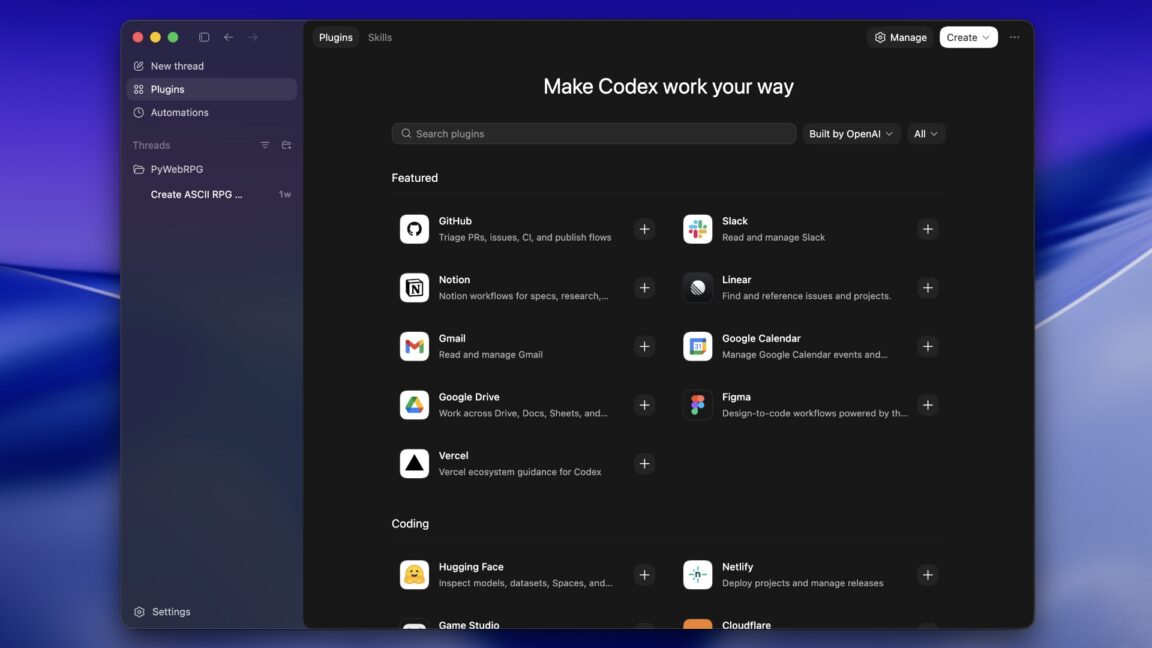
- A new Plugins section in Codex offers a searchable library of integrations.
- Sample plugins include GitHub, Gmail, Box, Cloudflare, and Vercel.
OpenAI has added plugin support to its Codex coding assistant, a move aimed at narrowing the functional gap with rival AI coding tools from Anthropic and Google. The new plugins are packaged bundles that may contain skills, app integrations, and Model Context Protocol (MCP) servers, letting users configure Codex for specific tasks with a single click. While power users could already achieve similar results through custom instructions and MCP servers, the plugin library—featuring integrations such as GitHub, Gmail, Box, Cloudflare, and Vercel—offers a more streamlined, searchable experience.
OpenAI Expands Codex with Plugin Capabilities
OpenAI has announced the addition of plugin support to its agentic coding application, Codex. The rollout is positioned as an effort to align Codex’s feature set with comparable offerings from competitors Anthropic, which provides similar functionality in its Claude Code product, and Google, which has integrated comparable capabilities into the Gemini command‑line interface.
The components OpenAI labels as “plugins” are essentially bundles that can include a variety of elements: custom skills that describe workflow prompts, integrations with external applications, and Model Context Protocol (MCP) servers. These bundles are designed to make it easier for users to configure Codex for particular tasks and to replicate those configurations across multiple users within an organization.
Although the functionality introduced by plugins is not fundamentally new—experienced users could already achieve comparable outcomes by manually adding custom instructions, employing MCP servers, and crafting bespoke workflows—the new system streamlines the process. By offering a one‑click installation mechanism, OpenAI reduces the technical overhead required to set up these capabilities.
Within the Codex interface, a dedicated Plugins section now directs users to a searchable library of available plugins. This library is intended to facilitate tight integration between Codex and a range of external services and applications. Sample integrations listed in the library include popular development and productivity platforms such as GitHub, Gmail, Box, Cloudflare, and Vercel.
Overall, the introduction of plugins represents a usability upgrade rather than a leap in technical capability. By packaging existing features into an accessible, searchable format, OpenAI aims to make Codex more approachable for a broader audience while still catering to power users who desire quick, repeatable configurations for their coding workflows.