OpenAI Executive Kevin Weil Departs as Prism Project Shuts Down
Key Points
- Kevin Weil, former chief product officer, announced his departure from OpenAI on Friday.
- OpenAI is discontinuing Prism, its AI workspace for scientists, and merging the team into the Codex division.
- Thibault Sottiaux, head of Codex, will oversee the integration of Prism’s capabilities into the Codex desktop app.
- The company launched GPT‑Rosalind, a set of models tailored for life‑science research, as part of its scientific initiative.
- Other executives, including Srinivas Narayanan and Bill Peebles, also left OpenAI in the same week.
- OpenAI’s restructuring aims to streamline product offerings ahead of a planned IPO later this year.
- CEO Sam Altman highlighted the shift from a startup mindset to a more predictable, platform‑focused operation.
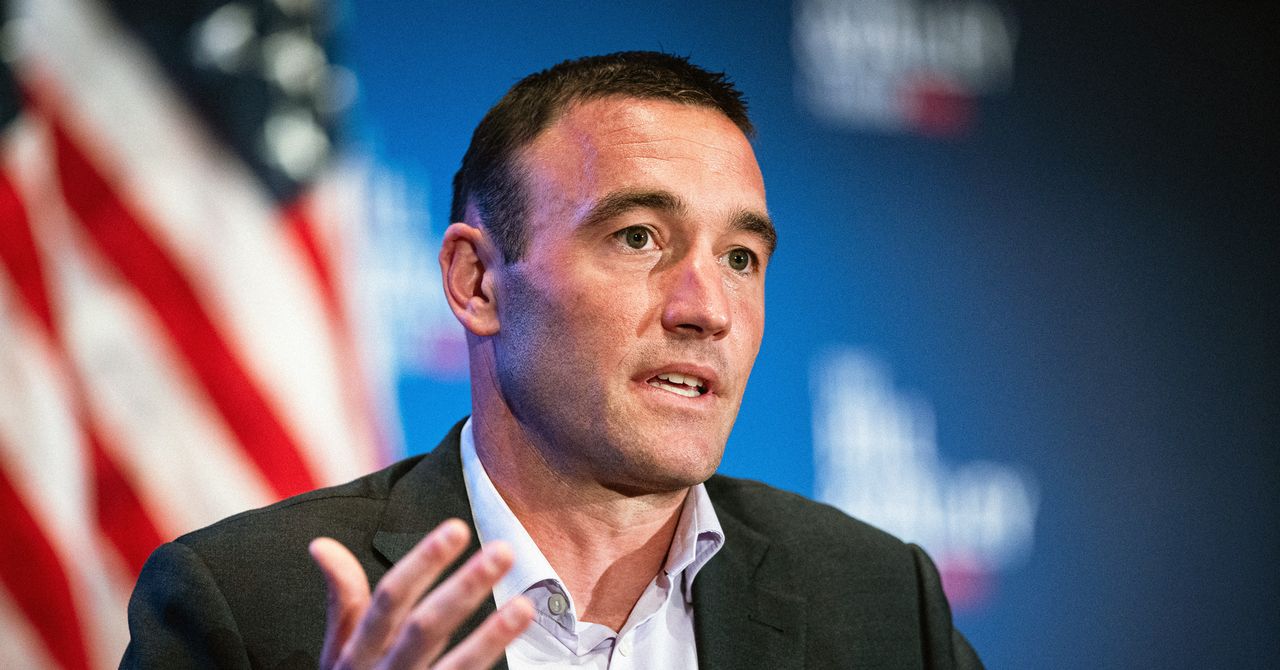
Kevin Weil, OpenAI's former chief product officer who recently led the company’s new AI workspace for scientists called Prism, announced his exit on Friday. The departure coincides with OpenAI’s decision to dissolve Prism, folding its roughly 10‑person team into the Codex division. The move is part of a broader effort to streamline product offerings and focus on enterprise and coding tools as the company prepares for an IPO. OpenAI also confirmed the launch of GPT‑Rosalind, a suite of models aimed at accelerating life‑science research.
Kevin Weil, who joined OpenAI in June 2024 after a stint as Instagram's vice president of product, said Friday that it was his last day at the AI laboratory. In a brief post on X, Weil explained that OpenAI for Science – the internal research initiative he helped launch – is being decentralized, with its staff redistributed across the firm’s product, research, and infrastructure teams.
Weil's exit comes as OpenAI pulls the plug on Prism, the web‑based AI workspace introduced in January to give scientists a more intuitive way to work with large‑language models. The roughly 10‑person Prism team will now report to Thibault Sottiaux, head of the Codex division, and its functionality will be folded into Codex’s desktop application. An OpenAI spokesperson confirmed the shift, saying it aligns with the company’s goal of unifying its business and product strategy.
Codex becomes the hub for AI‑powered coding and scientific tools
Codex, originally built as an AI‑assisted coding platform, is slated to become an “everything app” that incorporates Prism’s capabilities. The consolidation reflects OpenAI’s broader ambition to streamline its product portfolio ahead of a planned initial public offering later this year. In recent months, the company has trimmed several initiatives, including the Sora video‑generation app, to concentrate resources on enterprise offerings and core AI services.
While Prism is being retired, OpenAI announced the rollout of GPT‑Rosalind, a suite of models designed specifically for life‑science researchers. The new models aim to help scientists run experiments, analyze data, and generate hypotheses more quickly, underscoring OpenAI’s claim that accelerating scientific discovery remains a top priority.
Weil’s departure is the latest in a series of executive exits at OpenAI. Earlier Friday, the firm’s chief technology officer of enterprise applications, Srinivas Narayanan, announced he was leaving to spend more time with family. Bill Peebles, head of the Sora project, also posted that he was moving on. These moves follow a broader restructuring that saw co‑founder and president Greg Brockman temporarily assume product oversight and chief marketing officer Kate Rouch take a medical leave.
OpenAI CEO Sam Altman has publicly acknowledged the turbulence, noting in a recent blog post that the organization has shifted from a “scrappy startup” to a major platform that requires more predictable operations. The sentiment among staff, according to internal communications, reflects a mix of relief at the simplification of product lines and uncertainty about the company’s future direction.
Industry observers view the changes as a response to mounting competition from rivals such as Anthropic and the need to present a clear value proposition to enterprise customers. By consolidating its AI tools under the Codex banner and emphasizing specialized models like GPT‑Rosalind, OpenAI hopes to reinforce its leadership in both coding assistance and scientific research applications.
As OpenAI continues to refine its strategy, the exit of a high‑profile figure like Kevin Weil signals both the challenges of rapid growth and the company’s willingness to recalibrate its priorities. Whether the integration of Prism’s features into Codex will deliver the promised efficiencies remains to be seen, but the move underscores OpenAI’s commitment to a more focused, enterprise‑centric roadmap.