Nvidia launches DGX Spark, a compact AI supercomputer for desktops
Key Points
- DGX Spark runs Nvidia's ARM‑based DGX OS built on Ubuntu Linux.
- Includes preinstalled AI software stack with CUDA and NIM microservices.
- Starts at US $3,999, offering a cost‑effective entry to AI hardware.
- Performance comparable to an RTX 5070 GPU but with 128 GB unified memory.
- Enables execution of large AI models that exceed typical consumer GPU limits.
- CEO Jensen Huang personally delivered a unit to Elon Musk at SpaceX Starbase.
- Huang referenced a 2016 hand‑delivery to OpenAI, linking past and present missions.
- Positioned as a cheaper alternative to high‑end AI servers and GPUs.
Nvidia has introduced the DGX Spark, a small‑form‑factor AI system that runs an ARM‑based DGX OS built on Ubuntu Linux and includes the company’s AI software stack. Priced from US $3,999, the Spark offers performance comparable to an RTX 5070 GPU but with 128 GB of unified memory, enabling larger AI models. Nvidia CEO Jensen Huang highlighted the device’s mission by personally delivering a unit to Elon Musk at SpaceX’s Starbase, recalling a similar hand‑off to OpenAI in 2016.
Compact Design, Powerful Software
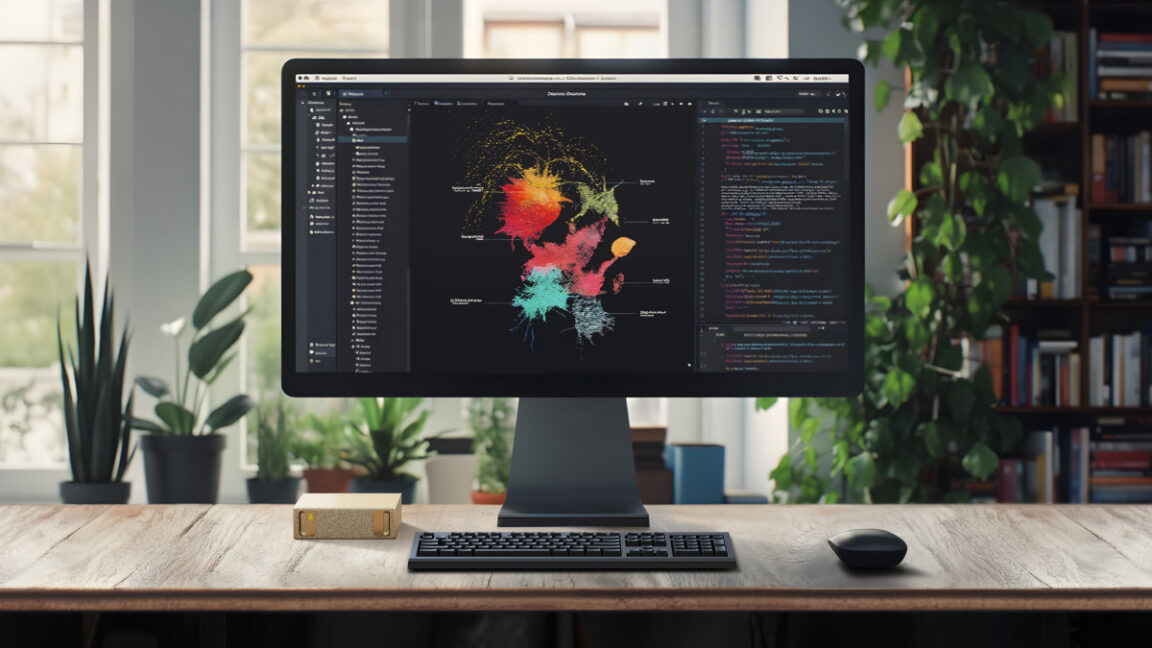
The DGX Spark is an ARM‑based system that runs Nvidia's DGX OS, an Ubuntu Linux‑based operating system built specifically for GPU processing. It comes with Nvidia's AI software stack preinstalled, including CUDA libraries and the company's NIM microservices.
Pricing and Performance
Prices for the DGX Spark start at US $3,999. According to The Register, the GPU computing performance of the GB10 chip is roughly equivalent to an RTX 5070. However, the RTX 5070 is limited to 12 GB of video memory, while the DGX Spark provides 128 GB of unified memory, allowing it to run far larger AI models.
Memory Advantage
With 128 GB of unified memory, the DGX Spark can handle models that would exceed the capacity of typical consumer GPUs. For example, a 120‑billion‑parameter language model would require about 80 GB of memory, far more than most single‑GPU solutions can accommodate.
CEO Jensen Huang’s Personal Delivery
Nvidia founder and CEO Jensen Huang marked the occasion of the DGX Spark launch by personally delivering one of the first units to Elon Musk at SpaceX's Starbase facility in Texas. This echoes a similar delivery Huang made to Musk at OpenAI in 2016. In a statement, Huang said, "In 2016, we built DGX‑1 to give AI researchers their own supercomputer. I hand‑delivered the first system to Elon at a small startup called OpenAI, and from it came ChatGPT. DGX‑1 launched the era of AI supercomputers and unlocked the scaling laws that drive modern AI. With DGX Spark, we return to that mission."
Market Position
While the DGX Spark is not as powerful as high‑end GPUs like the RTX 5090 or AI server GPUs such as the H100, its lower price point and substantial memory make it a less expensive option for organizations seeking on‑premise AI capability without the cost of large‑scale server infrastructure.