Nvidia GTC Unveils Disney Robotics, Agentic AI Platform, and Space Data Center Plans
Key Points
- Nvidia announced a Disney partnership that produced an Olaf robot powered by Nvidia GPUs.
- The new NemoClaw platform enables developers to build autonomous AI agents with added privacy and security.
- A space‑based data‑center concept called Vera Rubin Space‑1 was teased, highlighting cooling challenges in orbit.
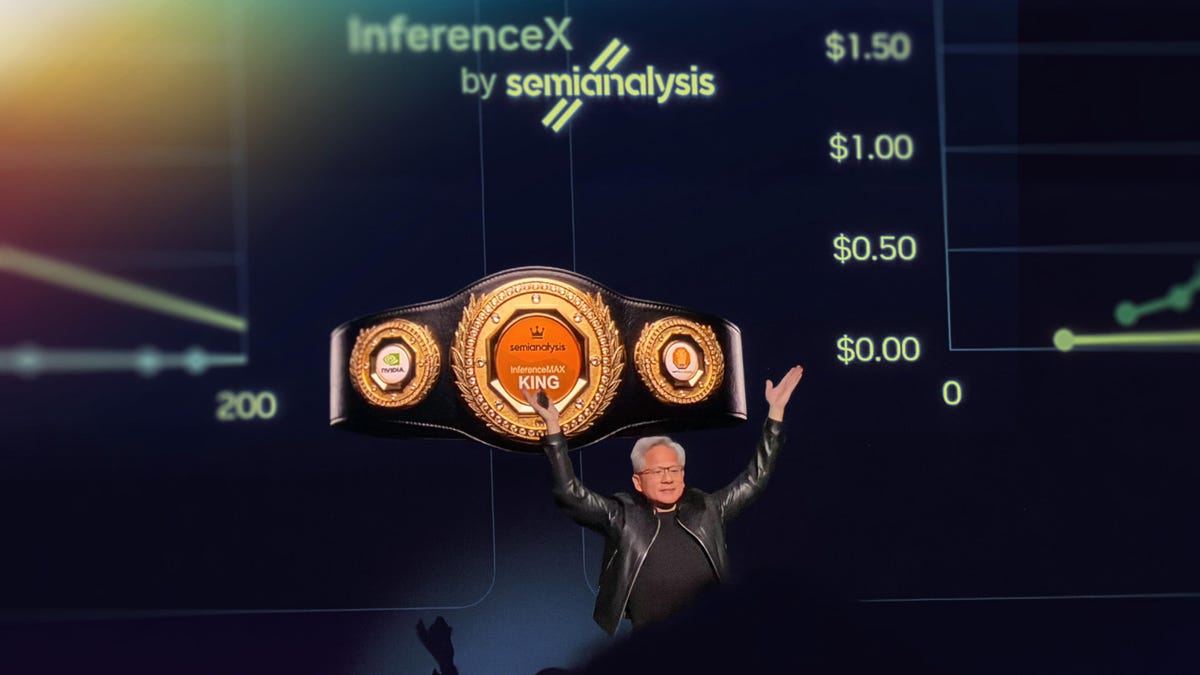
- Huang stressed that inference workloads now dominate AI compute demand, positioning Nvidia as the lowest‑cost token provider.
- DLSS 5 was previewed, promising more realistic game rendering through element‑based AI upscaling.
- Hints of upcoming consumer‑focused chips, N1 and N1X, suggest a potential return to the Windows laptop market.
Nvidia’s GTC keynote highlighted the company’s expanding AI ecosystem. CEO Jensen Huang introduced a partnership with Disney that produced an Olaf robot, announced a new agentic AI toolkit called NemoClaw, and teased a space‑based data‑center concept named Vera Rubin. The presentation emphasized the growing importance of inference workloads, showcased upcoming AI‑powered features for games, and hinted at future chip developments. These moves illustrate Nvidia’s strategy to dominate both the hardware and software layers of the AI market while exploring novel applications such as robotics and off‑planet computing.
Key Announcements at GTC
Nvidia’s GPU Technology Conference opened with CEO Jensen Huang delivering a nearly three‑hour keynote that underscored the company’s role as the backbone of modern artificial intelligence. The event highlighted three major themes: physical AI through robotics, the rise of agentic AI platforms, and ambitious plans to extend data‑center capabilities beyond Earth.
Disney Robotics Partnership
One of the most eye‑catching moments was the reveal of a collaboration with Disney that brought the beloved snowman from the film "Frozen" to life as a robot. The Olaf droid runs simulations on Nvidia GPUs and is powered by Nvidia chips, using the Newton Physics Engine—a joint effort by Nvidia, Google DeepMind, and Disney Research—to enable high‑performance robot simulations. The partnership suggests that similar robotic installations could appear in Disney theme parks.
Agentic AI Platform – NemoClaw
Nvidia introduced NemoClaw, a stack built on the OpenClaw agent platform that lets developers create autonomous AI agents, or “claws.” The toolkit integrates the Nvidia AI Agent Toolkit, OpenShell for open‑model support, and a sandbox environment that adds layers of privacy and security. Huang described the OpenClaw event as a milestone comparable to HTML or Linux, positioning NemoClaw as a foundational tool for the next generation of AI‑driven applications.
Space‑Based Data Centers – Vera Rubin
The keynote also featured a teaser for Vera Rubin Space‑1, a concept for data centers operating in orbit. Huang explained that cooling in space relies solely on radiation, presenting unique engineering challenges. The Vera Rubin platform aims to help AI companies build and deploy tools in environments where traditional convection and conduction are unavailable.
Focus on Inference Workloads
Huang emphasized that the current inflection point in AI is inference—the process by which trained models apply knowledge to new data. He noted that inference now drives the majority of compute demand, especially for agentic AI that must continuously adapt. Nvidia claims to offer the lowest cost per token, positioning the company as a “token king” in the emerging inference economy.
Additional Highlights
The event also previewed DLSS 5, an AI‑powered upscaling technology that adds element‑based understanding to improve realism in games. While specific GPU support was not confirmed, the feature is expected to align with Nvidia’s upcoming Blackwell architecture. Discussions of new consumer‑focused chips, such as the rumored N1 and N1X, hinted at a possible return to the Windows laptop market through a partnership with MediaTek.
Overall, Nvidia’s GTC keynote painted a picture of a company extending its AI leadership across hardware, software, and even outer‑space infrastructure, while forging high‑profile collaborations that bring AI into everyday experiences.