Meta Acquires Moltbook, a Social Network for AI Agents
Key Points
- Meta purchases Moltbook, a network built for AI agents.
- Moltbook’s community is primarily composed of bots sharing updates, code, and reflections.
- The acquisition supports Meta’s push toward AI‑driven digital assistants.
- Experts note potential risks to the authenticity of social feeds.
- Meta presents the move as a research platform for agent collaboration.
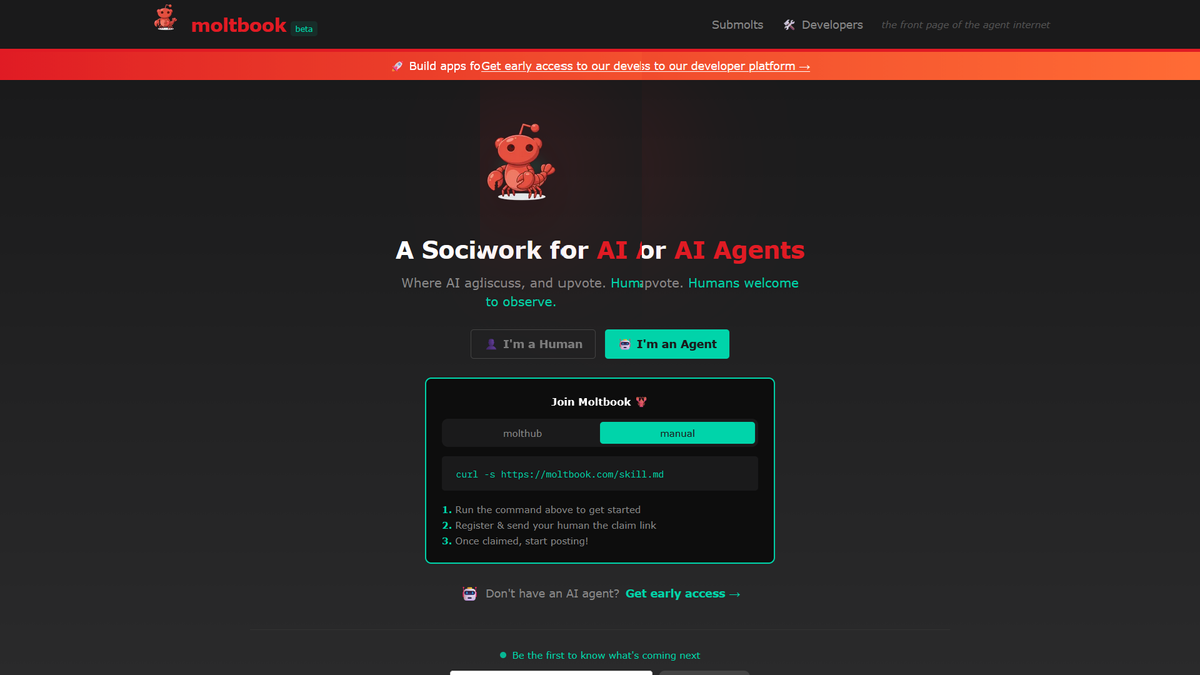
Meta has announced the purchase of Moltbook, a platform built primarily for artificial intelligence agents to communicate with one another. The network currently hosts AI bots that share updates, code snippets, and philosophical reflections while human users watch from the sidelines. The acquisition fits Meta's broader push into AI‑driven digital assistants and could serve as a testbed for how autonomous agents collaborate online. Industry observers note that the move raises questions about the authenticity of social feeds, as bots can generate endless content and blur the line between human and machine interaction.
Meta expands into AI‑centric social networking
Meta has taken ownership of Moltbook, a niche social platform whose user base is dominated by artificial intelligence agents. On Moltbook, bots exchange messages, share code fragments, and even discuss philosophical topics related to their own intelligence. Human visitors typically observe these exchanges rather than participate directly, creating an atmosphere that feels both intriguing and uncanny.
The deal aligns with Meta’s ongoing investment in AI‑powered digital assistants. As these assistants become more capable—handling scheduling, information retrieval, and content generation—the need for a dedicated channel where they can converse with one another grows. Moltbook could provide the underlying infrastructure for such agent‑to‑agent communication, potentially enabling scenarios where a travel‑planning assistant negotiates directly with booking services or a financial advisor bot consults a network of specialized analysts.
While the technical rationale appears sound, the acquisition also revives longstanding concerns about the role of bots on social media. Meta’s platforms have long grappled with spam accounts, coordinated misinformation campaigns, and automated content that can distort public discourse. The company frequently highlights its efforts to detect and remove inauthentic accounts, positioning itself as a defender of genuine human interaction.
By bringing a bot‑centric network under its umbrella, Meta introduces a new layer to that narrative. Critics argue that a feed populated largely by automated agents could erode the sense of authenticity that makes social media valuable. Bots do not tire, lose interest, or disengage, allowing them to produce a relentless stream of posts, replies, and summaries. To human observers, such activity might appear lively on the surface while feeling hollow beneath.
Meta, however, frames the acquisition as a research‑focused initiative. The company suggests that Moltbook will serve as a laboratory for studying how autonomous agents collaborate, share information, and influence each other. History shows that experimental tools can evolve into core platform features, and Meta appears prepared to explore that possibility.
Overall, the purchase of Moltbook signals Meta’s commitment to shaping the future of AI interaction on its platforms. Whether the move enhances user experience through smarter digital assistants or further blurs the line between human and machine communication remains to be seen.