Jury Weighs Musk's Claims Against OpenAI in High-Stakes Trial
Key Points
- A nine‑person jury in California is deliberating Elon Musk's lawsuit against OpenAI, its co‑founders and Microsoft.
- The case focuses on alleged breach of a charitable‑trust agreement, unjust enrichment, and aiding and abetting by Microsoft.
- OpenAI argues the claims are time‑barred, that Musk delayed filing unreasonably, and that his own conduct bars the suit.
- Musk's team highlights a 2023 $10 billion Microsoft investment as the turning point that diverted funds to for‑profit use.
- Forensic testimony shows Musk's donations were spent by the nonprofit foundation by 2020.
- A verdict could force OpenAI to restructure or dissolve its for‑profit arm, reshaping AI industry partnerships.
- If OpenAI prevails, the hybrid nonprofit‑for‑profit model would be upheld despite donor‑imposed conditions.
A nine‑person California jury has begun deliberations in the lawsuit filed by Elon Musk against OpenAI, its co‑founders and Microsoft. The jurors must decide whether OpenAI breached a charitable‑trust agreement, unjustly enriched its leaders, and whether Microsoft aided that breach. OpenAI argues the case is barred by statutes of limitations, that Musk delayed his claim unreasonably, and that his own conduct disqualifies him. A verdict could reshape the organization’s for‑profit arm and its relationship with major investors.
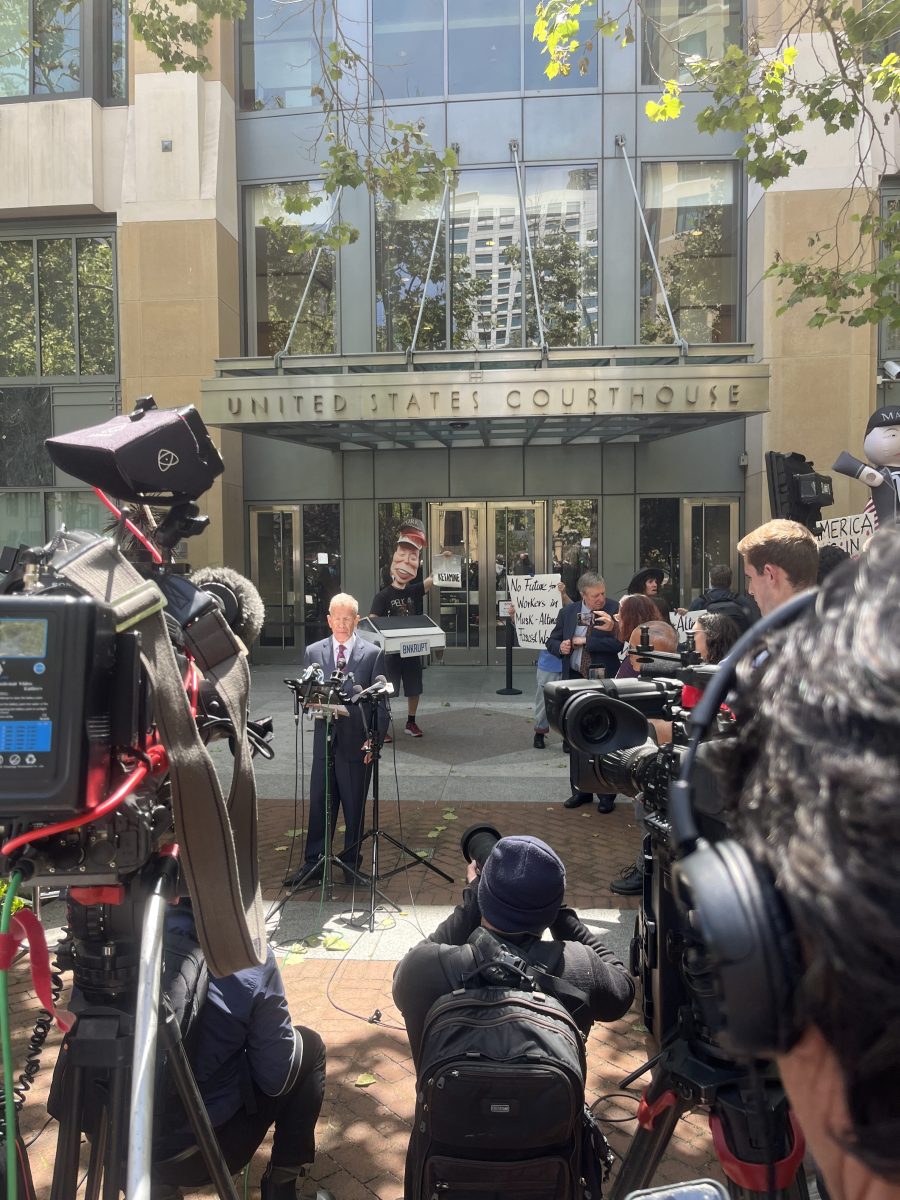
Nine jurors in a San Francisco courtroom are now deciding the fate of Elon Musk's lawsuit against OpenAI, the artificial‑intelligence lab he helped launch, as well as co‑founders Sam Altman and Greg Brockman and corporate partner Microsoft. The trial, which has traced the company’s evolution from a nonprofit experiment in 2015 to a hybrid structure that now generates billions in value, centers on three narrow legal questions.
The first asks whether OpenAI and its leaders violated a charitable‑trust agreement that Musk says required his donations to be used solely for nonprofit AI safety work. The second asks if the defendants used those funds to enrich themselves through OpenAI’s for‑profit arm. The third probes whether Microsoft, by partnering with OpenAI, knowingly assisted the alleged breach.
OpenAI’s defense rests on three counter‑arguments. It contends that the statute of limitations bars Musk’s claims because any alleged harm occurred before the court‑specified deadlines—August 5 2021 for the breach claim, August 5 2022 for unjust enrichment, and November 14 2021 for the aiding‑and‑abetting count. The company also argues that Musk’s 2024 filing constitutes an unreasonable delay that makes his requested damages untenable. Finally, OpenAI invokes the doctrine of "unclean hands," claiming Musk’s own conduct—such as his attempts to launch a competing for‑profit AI venture and his delayed public criticisms—disqualifies his suit.
At the heart of the dispute is a $10 billion Microsoft investment announced in 2023. Musk’s attorneys say the deal, which came after the statutory deadlines, turned OpenAI’s for‑profit affiliate into a vehicle that enriched its founders and Microsoft at the expense of the charitable mission Musk championed. They point to the soaring valuations of stakes held by Altman, Brockman, Ilya Sutskever and Microsoft as evidence of personal gain.
OpenAI counters that the donations were used by its nonprofit foundation long before Musk left the board in 2018 and that the for‑profit entity has continued to advance the organization’s mission, including safety research and free access to tools like ChatGPT. A forensic accountant testified that Musk’s contributions were fully deployed by 2020, well before the disputed dates. The company also notes that the nonprofit board still controls the for‑profit arm and that new governance safeguards were added after the 2023 "blip"—the brief ouster and reinstatement of Altman.
Witnesses for Microsoft maintain that the tech giant had no knowledge of any special conditions on Musk’s gifts and that its veto rights in the partnership agreement were exercised only to protect its own commercial interests, not to undermine the nonprofit. Microsoft executives argue that their investment and cloud‑compute support enabled OpenAI’s most significant breakthroughs.
Should the jury find in Musk’s favor, the verdict could force OpenAI to dissolve its for‑profit subsidiary or restructure its governance to satisfy the charitable‑trust requirements. Legal analysts caution that such an outcome would be unprecedented for a hybrid nonprofit‑for‑profit AI organization and could ripple through the broader tech‑investment ecosystem.
Conversely, a verdict for OpenAI would reaffirm the hybrid model and signal that large‑scale corporate partnerships can coexist with nonprofit missions, even when early donors impose specific conditions. The judge is slated to hold post‑verdict hearings next week to determine any remedial steps, but those could become moot if the jury returns a clear decision.