Google’s Gemini Voice Assistant Rolls Out Slowly Amid Early Glitches
Key Points
- Google began rolling out Gemini, its new AI‑driven voice assistant, to Home smart speakers and displays.
- A blog post praised the rollout, but the FAQ highlighted misinterpretations and device‑control issues.
- Access requires enrollment in an Early Access program that started in late October.
- Gemini integrates a new Ask Home chatbot and adds descriptive capabilities to Nest security cameras.
- Early users report that command chaining and reliable device control are still problematic.
- Google acknowledges generative‑AI challenges, noting LLMs are creative but less consistent for repeat tasks.
- The rollout is expected to continue slowly, possibly not reaching all users until next spring.
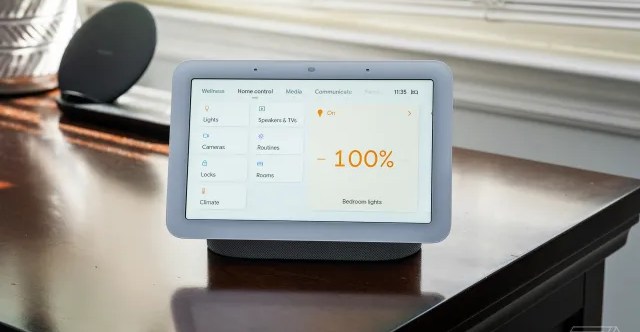
Google has begun rolling out its new Gemini voice assistant for Google Home smart speakers and displays, positioning it as the default assistant across its ecosystem. While a recent blog post praised the rollout and highlighted a user’s positive experience, the accompanying FAQ revealed recurring problems, including misinterpreted commands and unreliable device control. Access to Gemini requires enrollment in an Early Access program that launched in late October, and the rollout is expected to be gradual, potentially not reaching all users until next spring. Early feedback suggests the generative‑AI‑driven assistant still struggles with basic smart‑home tasks.
Rollout Overview
Google announced that the Gemini voice assistant has begun rolling out to its line of Home smart speakers and displays. The company framed the launch as a success, citing a user comment that the new assistant made the device "actually useful beyond asking for today’s weather." Gemini is set to replace the existing Google Assistant as the default voice interface on all supported devices.
Features and Integration
The Gemini for Home initiative adds AI‑powered capabilities to the Google Home app via a new "Ask Home" chatbot, allowing users to issue natural‑language text commands. It also extends to Nest security cameras, which can now generate descriptive summaries of what they see and feed that information into a daily Home Brief. These app and camera enhancements were introduced in early October and are available to all users, though some functionalities require a subscription.
Access Requirements
To obtain the Gemini voice assistant, users must sign up for an Early Access program that began on October 28. This sign‑up process is separate from the public preview and involves a waiting period before activation. The rollout is intentionally slow, mirroring Amazon’s approach with Alexa Plus, and many early adopters have not yet received the update.
Early User Feedback
Despite the optimistic messaging, the FAQ linked to the blog post highlights two frequent complaints: the assistant’s difficulty understanding queries (for example, setting an alarm for the wrong time) and its inconsistent control of connected devices such as lights and locks. Early Reddit comments also note that attempting to chain multiple commands—something Gemini is advertised to handle—does not yet work, even though a limited version of this feature existed in the prior Google Assistant.
Technical Challenges
Google acknowledges that generative‑AI models bring new conversational abilities but also introduce reliability issues. Anish Kattukaran from Google Home explained that large language models excel at creativity but struggle with repetitive, predictable tasks. This limitation makes it harder for the assistant to consistently execute the same command with the same outcome, a core requirement for smart‑home automation.
Future Outlook
Industry observers note that the rollout may not be complete until next spring, when a new Google Home speaker is expected to ship with Gemini preinstalled. Until the assistant’s reliability improves, users are advised to temper expectations and continue using established voice commands for critical smart‑home functions.