Google Introduces TurboQuant to Slash LLM Memory Use and Boost Speed
Key Points
- Google Research released TurboQuant, a compression algorithm for large language models.
- TurboQuant targets the key‑value cache, reducing its memory usage by up to six times.
- Performance tests show roughly eight‑fold speed improvements without quality loss.
- The algorithm uses PolarQuant to convert vectors into polar coordinates (radius and direction).
- Aggressive quantization preserves model accuracy while enabling aggressive compression.
- Reduced memory needs could allow LLM deployment on less powerful hardware.
- Faster inference speeds improve real‑time AI interaction capabilities.
Google Research unveiled TurboQuant, a new compression algorithm designed to dramatically reduce the memory footprint of large language models (LLMs) while also increasing inference speed. By targeting the key‑value cache—often described as a digital cheat sheet—TurboQuant can cut memory usage by up to six times and deliver performance gains of around eight times without sacrificing model quality. The technique relies on a novel PolarQuant conversion that represents vectors in polar coordinates, preserving essential information while enabling aggressive compression.
Background on LLM Memory Constraints
Large language models require substantial memory to store high‑dimensional vectors that capture semantic meaning across billions of tokens. These vectors, which can contain hundreds or thousands of embeddings, are essential for tasks such as text generation, translation, and question answering. However, the sheer size of the key‑value cache—often likened to a digital cheat sheet that holds intermediate results—creates a bottleneck that limits both speed and the practicality of deploying LLMs on modest hardware.
TurboQuant: A New Compression Approach
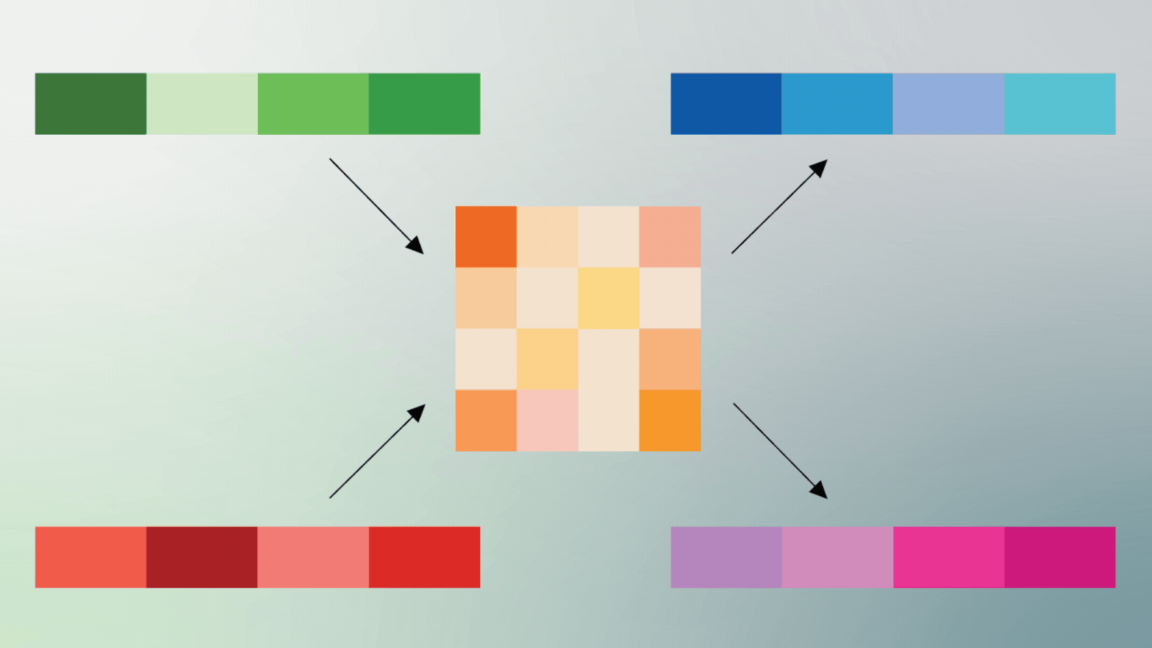
Google’s TurboQuant algorithm addresses this bottleneck by dramatically shrinking the memory needed for the cache. The method works in two steps. First, it employs a system called PolarQuant, which converts traditional Cartesian vector representations into polar coordinates. In this format, each vector is reduced to a radius, indicating data strength, and a direction, conveying meaning. This conversion enables the algorithm to retain essential information while discarding redundancy.
Second, TurboQuant applies aggressive quantization techniques that lower the precision of stored values. While conventional quantization often degrades output quality, TurboQuant’s polar‑based representation preserves accuracy, allowing the model to maintain its performance even after compression.
Performance Gains Reported by Google
Early testing by Google shows that TurboQuant can achieve up to a six‑fold reduction in memory usage for the key‑value cache. At the same time, inference speed improvements of roughly eight times have been observed in certain scenarios. Importantly, these gains are reported without any loss of quality in the model’s responses, suggesting that TurboQuant manages to balance efficiency and accuracy effectively.
Implications for AI Development and Deployment
The ability to run large language models with far lower memory requirements opens new possibilities for both research and commercial applications. Developers can now consider deploying sophisticated LLMs on hardware that previously could not accommodate the necessary memory, potentially reducing costs and expanding accessibility. Moreover, faster inference speeds translate to more responsive user experiences, making real‑time AI interactions more feasible.
Google’s focus on compression also reflects a broader industry trend toward optimizing AI models for efficiency, especially as the size of state‑of‑the‑art models continues to grow. Techniques like TurboQuant may become central to future AI infrastructure, enabling scalable, high‑performance systems without the prohibitive hardware demands that have traditionally accompanied large‑scale models.