Emergent launches Wingman, a messaging‑first autonomous AI agent
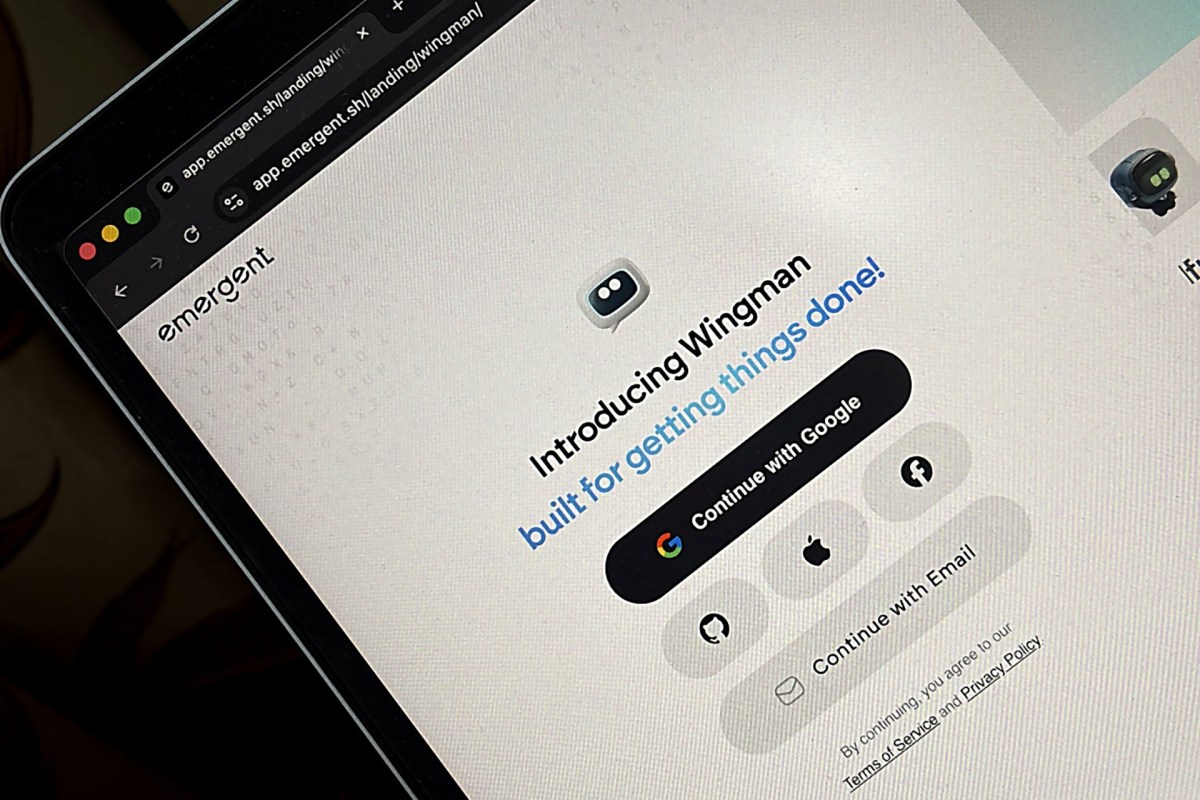
Key Points
- Emergent unveils Wingman, an AI agent that operates through WhatsApp, Telegram and iMessage.
- Wingman handles routine tasks across email, calendars and workplace apps without constant supervision.
- System requires user approval for high‑impact actions via "trust boundaries" to mitigate risk.
- Launch follows a free trial; paid subscription will follow for continued access.
- Emergent raised $70 million in January, valuing the startup at $300 million.
- The company’s vibe‑coding platform has attracted over 8 million builders and 1.5 million monthly users.
- Wingman aims to simplify workflow automation by leveraging chat, the primary medium for many workers.
Indian startup Emergent has introduced Wingman, a messaging‑centric autonomous AI agent that operates through WhatsApp, Telegram and iMessage. The new tool lets users assign routine tasks via chat while it runs in the background across email, calendars and workplace apps. Wingman is the latest move for the Bengaluru‑based firm, which previously built a low‑code vibe‑coding platform, and follows a wave of AI agents that aim to automate everyday workflows. The rollout begins with a limited free trial before shifting to a paid model.
Emergent, the Bengaluru‑based startup best known for its vibe‑coding platform, announced the launch of Wingman, a messaging‑first autonomous AI agent designed to handle routine tasks across a user’s digital workflow. The company says Wingman works through popular chat services such as WhatsApp, Telegram and Apple’s iMessage, allowing users to assign and monitor tasks simply by sending messages.
"The obvious next step for us was, can we help them not just build the software, but actually operate more autonomously through it?" co‑founder and CEO Mukund Jha told TechCrunch. "You move from software that supports the business to software that can actively help run it."
Wingman’s architecture lets it operate in the background, connecting to email, calendars and workplace tools to execute actions without constant user supervision. For low‑risk activities—like scheduling meetings, sending follow‑up emails or updating spreadsheets—the agent acts autonomously. When a task could have significant consequences, the system pauses for user approval, a safeguard Emergent calls a “trust boundary.”
The launch arrives amid a growing market for autonomous AI agents, a space that includes projects such as OpenClaw (formerly Clawdbot and Moltbot) and offerings from Anthropic and Microsoft. By embedding its agent in chat platforms, Emergent hopes to differentiate itself from rivals that require users to adopt new interfaces. Jha explained that most workplace communication already happens through chat, voice and email, so an AI that lives in those channels feels more natural.
Since its founding in 2025, Emergent has attracted significant venture backing, raising $70 million in a January round that valued the company at $300 million. Investors include SoftBank, Khosla Ventures and Lightspeed Venture Partners. The startup’s vibe‑coding platform—aimed at non‑technical users who can build full‑stack applications with natural‑language prompts—has logged more than 8 million creators and 1.5 million monthly active users.
Wingman is initially available through a limited free trial. After the trial period, access will shift to a paid model, though existing Emergent customers can integrate the agent into their current accounts. Jha acknowledged that the system still grapples with ambiguous situations, messy edge cases and tasks that demand nuanced human judgment. "It struggles around consistency in really ambiguous situations, messy edge cases, unclear goals, or workflows where a lot of human judgment is needed," he said.
Industry observers see the move as part of a broader push to embed AI deeper into everyday productivity tools. As more companies explore AI‑driven automation, the balance between convenience and control—exemplified by Wingman's trust boundaries—will likely shape user adoption. For now, Emergent aims to turn chat into a command center, letting users delegate repetitive work while keeping a human eye on the bigger decisions.