Anthropic Unveils Claude Design, AI Tool for Rapid Visual Prototyping
Key Points
- Anthropic launches Claude Design, an AI service that creates visual assets from text prompts.
- Target audience includes founders, product managers and other non‑design professionals.
- Built on Claude Opus 4.7, the tool is available in research preview for Pro, Max, Team and Enterprise plans.
- Outputs can be exported as PDFs, PPTX files, URLs, or sent directly to Canva for further editing.
- Claude Design can apply a company’s design system by reading its codebase and design files.
- The service complements existing design platforms rather than trying to replace them.
- Early users report creating prototype decks in under ten minutes.
- Anthropic has declined recent high‑valued funding offers, focusing on product rollout.
Anthropic announced the launch of Claude Design, an experimental AI product that generates visual assets such as prototypes, slides, and one‑pagers from plain‑language prompts. Targeted at founders, product managers and other non‑designers, the service lets users describe a concept and receive a ready‑made layout that can be edited directly or refined through further prompts. Built on Claude Opus 4.7, the tool integrates with Canva and can apply a company’s existing design system, positioning it as a fast‑track alternative to traditional design software.
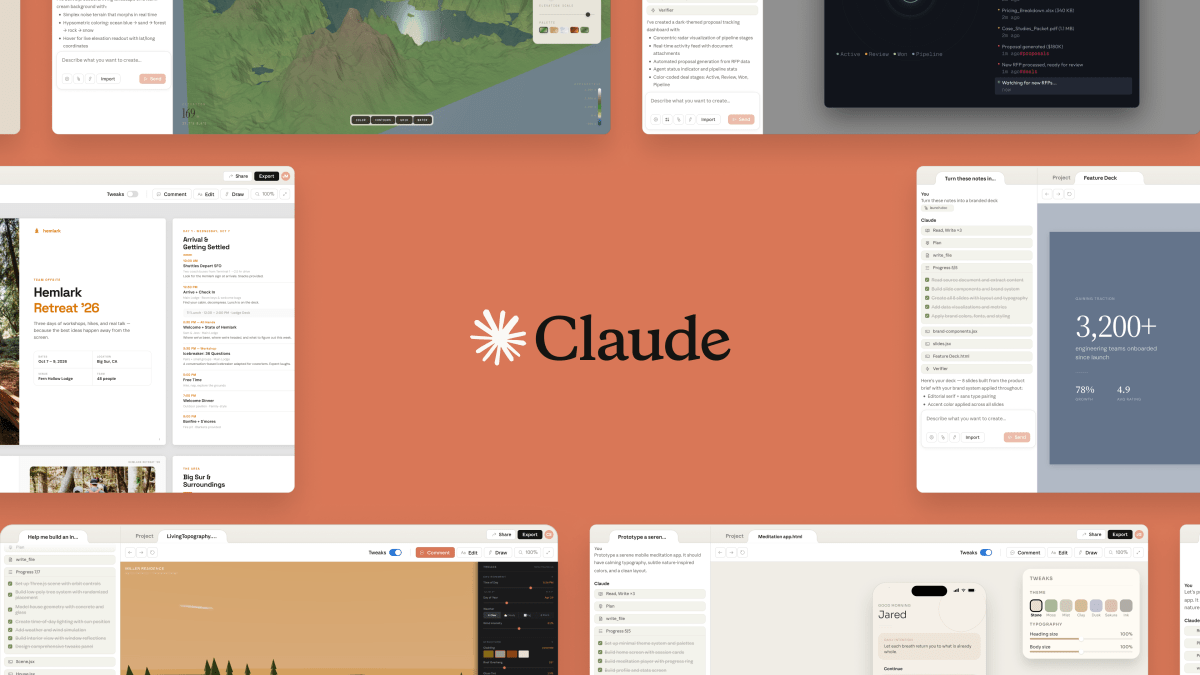
Anthropic rolled out Claude Design on Friday, positioning the new service as a shortcut for teams that need visual output without the time‑intensive work of a traditional design suite. Users type a description—"prototype a serene mobile meditation app with calming typography, nature‑inspired colors, and a clean layout"—and the AI returns an initial mockup. From there, creators can tweak colors, adjust font sizes or request additional features like a dark‑mode toggle, all through conversational prompts.
The product is aimed squarely at founders, product managers and other professionals who lack formal design training but must convey ideas quickly. Anthropic frames Claude Design as a bridge between concept and visual, rather than a competitor to established tools such as Canva. After generating a deck or prototype, users can export the result as a PDF, PPTX, URL, or push it straight into Canva, where the file becomes fully editable and collaborative.
One of Claude Design’s standout capabilities is its ability to enforce a company’s design system across every project. By ingesting a firm’s codebase and design files, the AI can produce assets that match existing branding guidelines. Teams can also maintain multiple design systems and refine components on the fly, ensuring consistency without manual re‑creation.
Claude Design runs on Anthropic’s Claude Opus 4.7 model and is currently available in a research preview for Claude Pro, Max, Team and Enterprise subscribers. The rollout follows earlier moves by Anthropic into the enterprise AI space, including the January launch of Claude Cowork, an agentic assistant for complex tasks, and the subsequent addition of plug‑ins that automate department‑specific workflows.
Industry observers note that the timing aligns with a broader surge in AI‑driven workplace tools. While Canva recently expanded its own AI features, Anthropic says its offering is meant to complement, not replace, such platforms. The company also highlighted the ease of exporting to Canva, where users can continue editing without leaving the familiar interface.
Anthropic’s push into visual AI comes amid heightened competition for funding and market share. Bloomberg reported that venture capitalists have floated a preemptive financing round valuing Anthropic at $800 billion, a figure that would rival OpenAI. The company, however, has so far declined to pursue the latest offers, focusing instead on product development and enterprise adoption.
Early adopters praise Claude Design’s speed and the quality of its first‑draft visuals. “I was able to turn a vague idea into a polished slide deck in under ten minutes,” said a product manager who participated in the preview. The ability to iterate via natural language also reduces the back‑and‑forth that typically slows down design cycles.
Critics caution that AI‑generated designs may still require human oversight to avoid brand missteps or accessibility issues. Anthropic acknowledges this, noting that the tool is designed for rapid prototyping rather than final production, and encourages users to review and refine outputs before public release.
As AI continues to permeate creative workflows, Claude Design represents another step toward integrating conversational models into everyday business tasks. Whether it will become a staple in product teams or remain a niche experiment depends on how quickly organizations adopt AI‑first approaches to visual communication.