Anthropic Unveils Claude Code Integration for Slack, Elevating AI-Powered Development
Key Points
- Anthropic launches Claude Code beta inside Slack for end‑to‑end coding workflows.
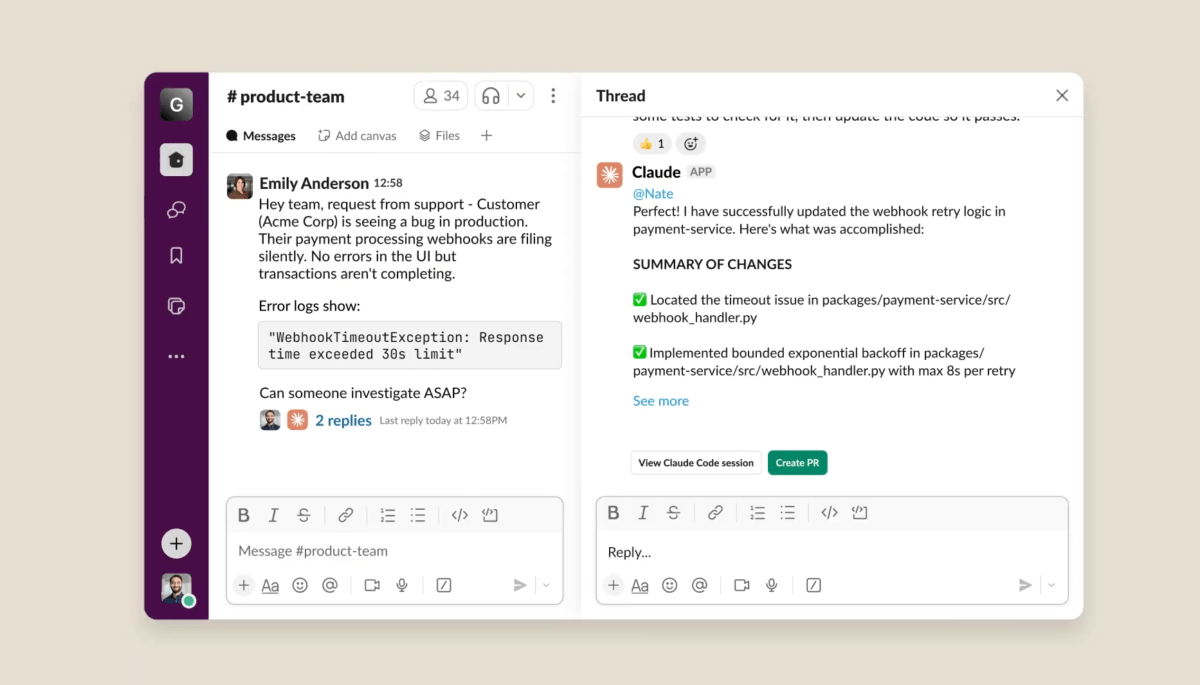
- Developers can tag @Claude to convert chat context into repository‑specific code generation.
- Progress updates, review links, and pull requests are posted directly in Slack threads.
- The integration reflects a shift from IDE‑centric to collaboration‑centric AI coding tools.
- Competing solutions from Cursor, GitHub Copilot, and OpenAI Codex are also exploring Slack integration.
- Security and IP concerns arise from granting code repository access via Slack.
- Potential operational risks include outages or rate limits affecting both Slack and Claude APIs.
- Anthropic aims to make Slack an "agentic hub" for AI‑augmented development.
- The beta release is a research preview; broader availability timelines are not disclosed.
Anthropic has introduced Claude Code as a beta feature within Slack, allowing developers to initiate full coding sessions directly from chat threads. The integration expands on existing Slack capabilities by automatically selecting repositories, posting progress updates, and linking to pull requests without leaving the conversation. This move underscores a broader industry shift toward embedding AI coding assistants in collaboration platforms rather than traditional IDEs. While competitors like Cursor, GitHub Copilot, and OpenAI Codex are also exploring similar integrations, Anthropic’s rollout highlights the strategic importance of workflow‑centric AI tools. Security and dependency concerns accompany the new functionality, prompting teams to consider access controls and platform reliability.
Anthropic Expands AI Coding Assistance Into Slack
Anthropic announced the beta launch of Claude Code within Slack, a feature that enables developers to command a full coding session directly from a chat thread. By tagging @Claude, users can transform a bug report, feature request, or any development‑related message into an actionable coding workflow. Claude analyzes recent conversation context, determines the appropriate code repository, and begins generating code, posting incremental updates in the same Slack thread. When the work is complete, the assistant shares links to review the changes and opens a pull request, keeping the entire process inside the collaborative environment where teams already communicate.
Shifting From IDEs to Collaboration Hubs
The rollout reflects a growing industry trend: AI coding assistants are migrating from traditional integrated development environments to the platforms where developers spend most of their time. Tools such as Cursor already provide Slack‑based drafting and debugging, while GitHub Copilot has added capabilities to generate pull requests from chat interactions. OpenAI’s Codex is also accessible via custom Slack bots. Anthropic’s Claude Code adds depth to this movement by automating end‑to‑end workflows rather than merely offering snippets or explanations.
Strategic Implications for Slack and AI Providers
By positioning Slack as an “agentic hub,” Anthropic aims to make the platform a central conduit for AI‑augmented development. Whichever AI tool achieves the deepest integration with Slack could influence how software teams collaborate and deliver code. The integration also signals that differentiation among AI coding solutions is increasingly tied to the breadth of integration and distribution channels, not solely to raw model performance.
Security, IP, and Operational Considerations
The new functionality introduces additional layers of complexity around code security and intellectual property protection. Teams must manage repository access through Slack, ensuring proper authentication, audit trails, and compliance with internal policies. Moreover, reliance on both Slack’s infrastructure and Claude’s API creates potential points of failure; outages or rate‑limiting in either system could disrupt development pipelines that were previously controlled locally.
Industry Context and Outlook
The AI‑driven coding market is becoming more competitive, with multiple players seeking to embed their assistants into everyday developer tools. Anthropic’s decision to launch Claude Code as a research preview underscores a strategic push to secure a foothold in the collaboration‑first workflow model. While broader rollout timelines remain unclear, the beta release positions Claude Code as a notable contender in the evolving landscape of AI‑enabled software development.