Anthropic launches Claude Design, an AI‑powered visual design assistant
Key Points
- Anthropic unveils Claude Design, an AI‑powered visual design assistant running on Opus 4.7.
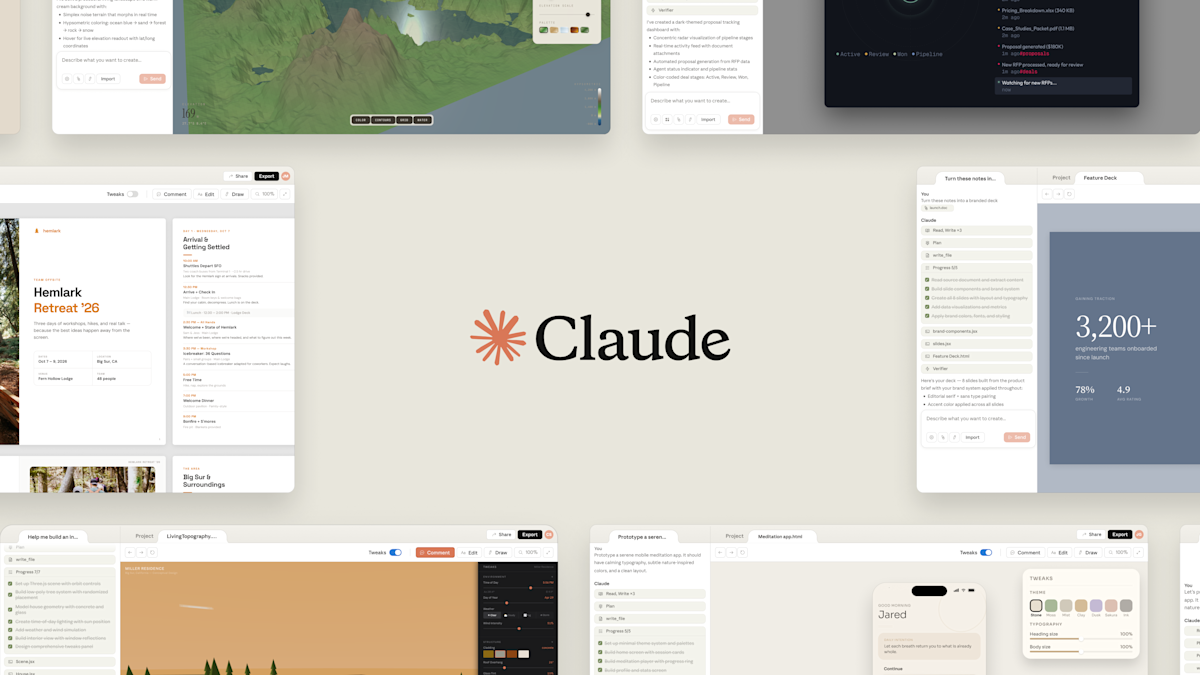
- Projects start with a text prompt; users refine outputs via conversation, comments and custom sliders.
- Onboarding reads an organization’s codebase and design docs to adopt its colors, typography and branding automatically.
- Supports image, document uploads and a web‑capture tool for importing website elements.
- Built‑in sharing and export to Claude Code; integration capabilities promised in coming weeks.
- Available to Pro, Max, Team and Enterprise subscribers, with usage counted against plan limits.
- Launch coincides with AI assistants from Adobe and Canva, positioning Claude Design as a direct competitor.
Anthropic introduced Claude Design, a research‑preview app that lets subscribers generate prototypes, slides, and full‑scale designs using its latest vision model, Opus 4.7. The tool starts with a text prompt and lets users refine outputs through conversation, inline comments and custom sliders. It can ingest an organization’s existing design assets to adopt its colors and typography automatically, and supports image uploads, document imports, and web captures. Claude Design is available to Pro, Max, Team and Enterprise customers and competes with recent AI assistants from Adobe and Canva.
Anthropic rolled out Claude Design this week as a research‑preview service aimed at designers, product teams and anyone who needs to produce visual work quickly. The new app runs on Opus 4.7, the company’s most capable vision model to date, and is bundled with Anthropic’s Pro, Max, Team and Enterprise subscription plans.
Every Claude Design project begins with a user‑written prompt. From that seed, the system generates a design that can be tweaked through a back‑and‑forth dialogue, inline comments or direct edits. One standout feature mirrors Adobe’s AI assistant: Claude creates custom sliders linked to specific visual elements, allowing users to adjust attributes such as glow intensity or arc density with a simple drag.
Anthropic also built an onboarding flow that scans an organization’s codebase and existing design documentation. The system learns the company’s visual language—its color palette, typography and branding guidelines—and automatically applies those standards to new projects. Users can supplement prompts with image or document uploads, and a built‑in web‑capture tool lets them snap elements straight from a corporate website.
Collaboration is baked in. Designs can be shared internally, and the output can be exported directly to Claude Code for further development. Anthropic says it will soon make it easier to integrate Claude Design with other enterprise tools, though integration details remain forthcoming.
Claude Design arrives at a busy moment for AI‑driven visual tools. Adobe and Canva both announced their own AI assistants in the same week, positioning Claude Design as a direct competitor. Anthropic notes that its app can export projects to Canva, suggesting a level of interoperability rather than outright competition.
While still in preview, the service is already available to Anthropic’s paid subscribers, with usage counted against existing limits. The company frames Claude Design as a way for designers to explore broadly and for non‑designers to produce polished visual content without starting from scratch.